Are E-Bike Conversion Kits Worth It? A Complete 2026 Cost-Benefit Analysis
An e-bike conversion kit transforms a standard bicycle into an electric-assisted ride using a motor, battery, controller, and display. Quality kits range from $200 to $1,500, while comparable factory e-bikes cost $2,000 to $4,000. This guide breaks down when converting makes financial sense and when buying new is the smarter choice.
What Is an E-Bike Conversion Kit?
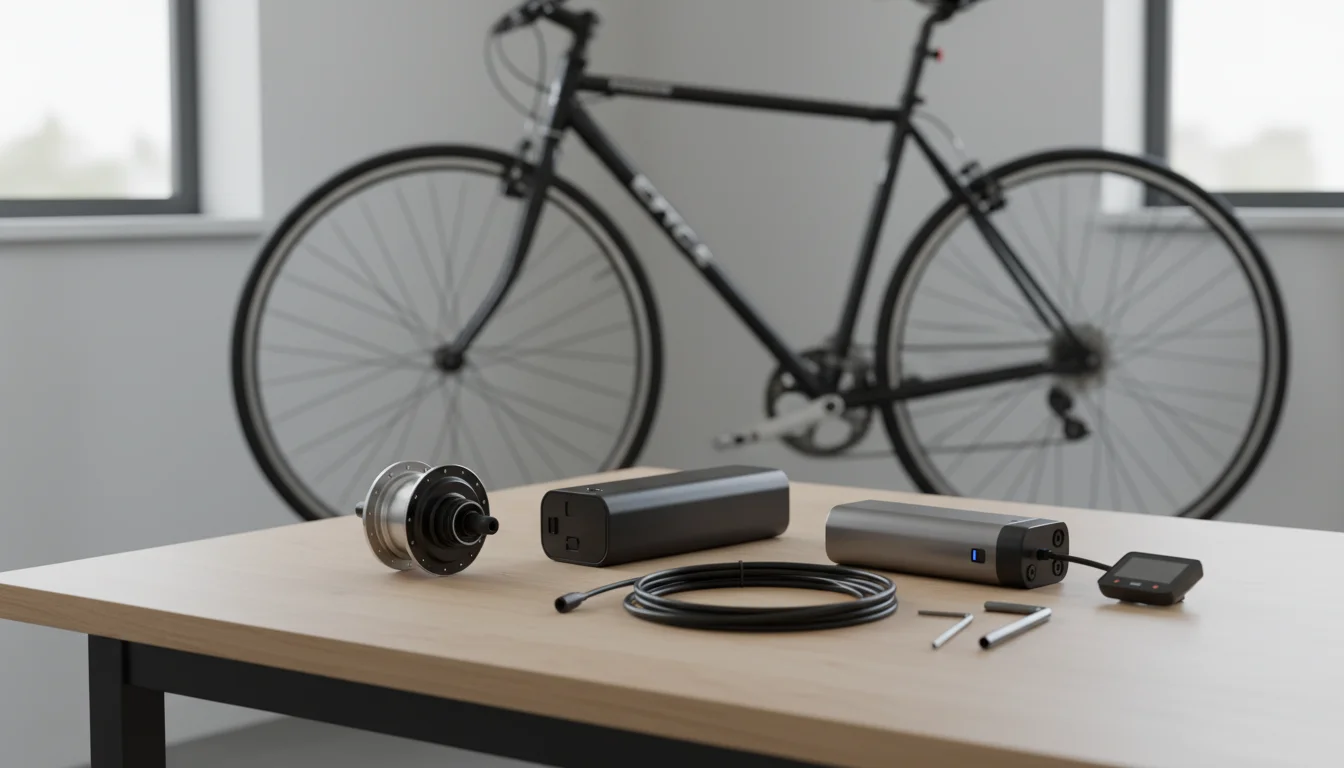
An ebike conversion kit adds electric propulsion to your existing bicycle through bolt-on components. The core system includes a motor unit, lithium battery pack, electronic controller, and handlebar display. Installation transforms any compatible bike into a pedal-assist or throttle-controlled electric vehicle.
| Component | Hub Motor Kit | Mid-Drive Kit |
|---|---|---|
| Motor Location | Front or rear wheel | Bottom bracket area |
| Best For | Flat terrain, casual riding | Hills, off-road, touring |
| Installation Difficulty | Beginner-friendly | Intermediate to advanced |
| Drivetrain Wear | Minimal | Increases chain and cassette wear |
| Weight Distribution | Can feel unbalanced | Centered, natural handling |
| Typical Price | $200-$600 | $500-$1,500 |
The hub motor vs mid-drive conversion decision comes down to your terrain and riding style. Hub motors work well for urban commuting on flat routes. Mid-drive systems shine on hills because they leverage your existing gears for better torque multiplication.
Power ratings range from 250W to 1000W for most legal street use. A 250W motor handles flat commutes adequately, while a 750W setup tackles moderate hills without struggle. Anything above 1000W enters off-road or private property territory in most U.S. states.
DIY ebike conversion appeals to riders who want control over component selection. You choose the exact battery capacity, motor power, and display features. Factory e-bikes lock you into whatever the manufacturer chose.
Cost Comparison: Conversion Kit vs New E-Bike
Converting your current bike costs 40-60% less than buying a factory e-bike with similar performance specs. The savings increase when you already own a quality frame worth preserving.
| Category | Price Range | What You Get |
|---|---|---|
| Budget Conversion Kit | $200-$400 | 250-500W hub motor, basic display, 10-20 mile range |
| Mid-Range Kit | $400-$800 | 750W motor, better battery, 25-40 mile range |
| Premium Kit | $800-$1,500+ | Mid-drive motor, large battery, 40-60 mile range |
| Entry E-Bike | $1,000-$1,500 | Basic components, limited range, heavy frame |
| Quality E-Bike | $2,000-$4,000 | Integrated design, good components, warranty |
E-bike conversion kits cost less upfront, but you should factor in hidden expenses. Some kits exclude the battery, adding $100-$300 to your total. Professional installation runs $100-$300 if you lack mechanical confidence. Tools for DIY installation cost $30-$50 if you don't own basics like torque wrenches and cable cutters.
Here's a real savings calculation. A mid-range Bafang BBS02 kit at $600 plus a $250 battery plus $100 for installation totals $950. A comparable factory e-bike with a quality mid-drive motor costs $2,500 minimum. That's $1,550 in savings—62% less. LeoGuar Bikes confirms this math holds across most conversion kit vs new ebike comparisons.
Affordable ebike conversion makes the most sense when your donor bike costs $500 or more. Converting a $200 department store bike rarely delivers good results. Frame geometry, component quality, and structural integrity matter too much.

Installation: DIY or Professional Help?
Most hub motor kits require 2-4 hours and basic mechanical skills. You need comfort with removing wheels, routing cables, and following wiring diagrams. Mid-drive installations demand more expertise around bottom bracket removal and drivetrain adjustments.
- Skills you need for hub motors: Wheel removal, brake adjustment, basic wiring, zip-tie management
- Skills you need for mid-drive: Bottom bracket extraction, chainline adjustment, derailleur tuning
- Tools required: Pedal wrench, bottom bracket tool, cable cutters, torque wrench, multimeter
- Common mistakes: Over-tightening bolts, poor cable routing, incorrect brake sensor placement
Ebike conversion kit installation gets tricky with hydraulic disc brakes. The brake cutoff sensors require splicing into hydraulic lines or using magnet-based alternatives. Internal cable routing on modern frames adds complexity. Carbon fiber frames need extra caution because overtightening motor mounts causes cracking.
Seek professional help when your frame has thru-axle dropouts, press-fit bottom brackets, or carbon construction. A bike shop with e-bike experience charges $150-$250 for full installation. That investment prevents costly mistakes on expensive donor bikes.
DIY ebike conversion rewards patience. Watch the manufacturer's installation video twice before starting. Lay out all components and verify nothing is missing. Take photos at each step so you can reverse mistakes. Test ride in a parking lot before hitting traffic.
Compatibility: Will a Conversion Kit Work on Your Bike?
Steel and aluminum frames handle conversion stress reliably. Carbon fiber frames risk cracking under motor torque and should be avoided unless the manufacturer explicitly approves electric conversion.
| Frame Material | Conversion Suitability | Risk Level |
|---|---|---|
| Steel | Excellent | Low |
| Aluminum | Excellent | Low |
| Titanium | Good | Low-Medium |
| Carbon Fiber | Poor | High |
Dropout compatibility determines which hub motors fit your bike. Standard quick-release dropouts measure 100mm front and 135mm rear. Most kits target these dimensions. Thru-axle frames need specialized kits that cost more and offer fewer options. Fat bikes require 170-197mm spacing with dedicated hub motors. Cycling Weekly notes that slight spacing mismatches can sometimes be resolved by careful filing, but this risks frame damage.
Mid-drive kits fit 68mm or 73mm bottom brackets, which covers most road and mountain bikes. PressFit, BB30, and proprietary systems create compatibility nightmares. Check your bottom bracket shell width and threading before purchasing. EBikes.ca maintains detailed compatibility charts worth consulting.
Bikes that convert best: Sturdy steel commuters, hardtail mountain bikes, touring frames, and vintage road bikes with horizontal dropouts. These frames tolerate added weight and motor torque without issues.
Bikes to avoid converting: Lightweight carbon road bikes, triathlon frames, bikes with integrated cockpits, and anything with proprietary component standards. Most electric bike conversion kit brands don't support these edge cases.
Performance and Reliability: What to Expect
Expect 20-50 miles per charge depending on battery capacity, terrain, rider weight, and assist level. A 500Wh battery delivers roughly 40 miles on moderate pedal assist. Throttle-only riding cuts range by 40-50%.
| Performance Factor | Budget Kit | Premium Kit |
|---|---|---|
| Typical Range | 15-25 miles | 35-60 miles |
| Motor Noise | Noticeable whine | Near silent |
| Throttle Response | Delayed, jerky | Smooth, immediate |
| Hill Climbing | Struggles on steep grades | Handles 15%+ grades |
| Build Quality | Plastic housings, thin wires | Metal construction, quality connectors |
| Expected Lifespan | 2-3 years | 5+ years |
Speed capabilities depend on your local laws. Class 1 e-bikes assist up to 20mph with pedaling only. Class 3 systems reach 28mph. Most conversion kits are programmable, letting you set limits that match your jurisdiction. Fair warning: exceeding legal limits voids insurance coverage and creates liability issues.
Are conversion kits reliable? Quality matters enormously. Bafang, TongSheng, and CYC motors have proven track records with thousands of miles. No-name Amazon kits fail at alarming rates. BikeRadar recommends sticking with established brands even when budget options tempt you.
Warranties on the best ebike conversion kits 2026 typically cover 1-2 years for motor and controller, plus 1 year for the battery. Factory e-bikes from reputable brands offer 2-year comprehensive coverage. This warranty gap is a legitimate reason to consider buying new over converting.
Battery replacement runs $300-$600 every 3-5 years depending on usage. Mid-drive systems accelerate drivetrain wear, requiring chain replacement every 1,000-2,000 miles versus 2,000-3,000 miles on regular bikes.
When Conversion Kits Make Sense (And When They Don't)
Converting wins when you own a beloved bike that fits perfectly, have a quality frame worth preserving, enjoy hands-on projects, and prioritize value over convenience.
Convert when:
- Your current bike fits you perfectly and rides great
- The frame is steel or aluminum in good condition
- You want specific components a factory bike doesn't offer
- Budget constraints make new e-bikes unrealistic
- You enjoy mechanical projects and learning new skills
Buy new when:
- Your current bike needs significant repairs anyway
- You want comprehensive warranty coverage
- Time matters more than money
- You prefer a polished, integrated aesthetic
- Your frame is carbon, worn out, or incompatible
The environmental angle deserves mention. Converting extends a bike's useful life by years, avoiding the carbon footprint of manufacturing a new e-bike. That sustainability factor matters to many riders choosing affordable ebike conversion over replacement.
There's emotional value too. A 15-year-old touring bike carries memories from thousands of miles. Converting it preserves that connection while adding capability. A new e-bike would ride fine but wouldn't feel the same. Sometimes the intangibles tip the decision.
FAQ
How long does an e-bike conversion kit last?
Quality kits from established brands like Bafang or TongSheng last 5-7 years with proper maintenance. Budget kits often fail within 2-3 years. Battery lifespan averages 3-5 years or 500-1,000 charge cycles before significant capacity loss.
Can I convert a bike with disc brakes?
Yes, but you need brake cutoff sensors to stop motor assist when braking. Mechanical disc brakes are straightforward. Hydraulic systems require magnet-based sensors or professional installation to splice into brake lines safely.
Will a conversion kit void my bike's warranty?
Almost certainly yes. Adding a motor modifies the frame's intended use and stress patterns. Manufacturers exclude warranty coverage for converted bikes. Only convert bikes already out of warranty or ones you're willing to self-support.
Are e-bike conversion kits street legal?
Kits producing 750W or less and limiting speed to 20mph (Class 1) or 28mph (Class 3) are legal on most U.S. roads and bike paths. Regulations vary by state and country. Higher-power kits are restricted to private property or off-road use.
How much weight does a conversion kit add?
Hub motor kits add 15-20 pounds including the battery. Mid-drive systems run slightly lighter at 12-18 pounds total. This weight affects handling, especially on lightweight frames designed for minimal mass.
Can I install a conversion kit on a folding bike?
Many folding bikes accept hub motor kits if they have standard dropout spacing. Small wheel sizes (16-20 inch) limit motor options. Verify frame strength ratings before adding motor torque. Some folding bike brands offer purpose-built e-conversion solutions.
What maintenance does a converted e-bike need?
Check electrical connections monthly for corrosion or looseness. Keep the battery charged between 20-80% for longevity. Clean the motor housing and inspect mounting bolts quarterly. Mid-drive systems need more frequent chain and cassette inspection due to increased wear.
Is it cheaper to replace the battery or buy a new kit?
Battery replacement at $300-$600 beats buying a complete new kit at $500-$1,500. Replace only the battery when the motor and controller still work fine. Upgrade to a full new kit when multiple components fail or you want better performance.
Share this post
Related Posts
Why Is My Ebike Throttle Not Working? 8 Common Causes and Fixes
Why Is My Ebike Throttle Not Working? 8 Common Causes and Fixes
Can E-Bikes Be Ridden in the Rain? Complete Guide to Wet Weather Riding in 2026
Can E-Bikes Be Ridden in the Rain? Complete Guide to Wet Weather Riding in 2026
Do You Need a Driver's License for an E-Bike? 2026 State-by-State Guide
Do You Need a Driver's License for an E-Bike? 2026 State-by-State Guide