Can E-Bikes Be Ridden in the Rain? Complete Guide to Wet Weather Riding in 2026
Can e-bikes be ridden in the rain? Yes. Most modern e-bikes carry IPX4 to IPX6 water resistance ratings, protecting critical electrical components from splashes and low-pressure water jets. This guide covers IPX ratings, vulnerable components, safety protocols, and maintenance practices for confident wet weather riding.
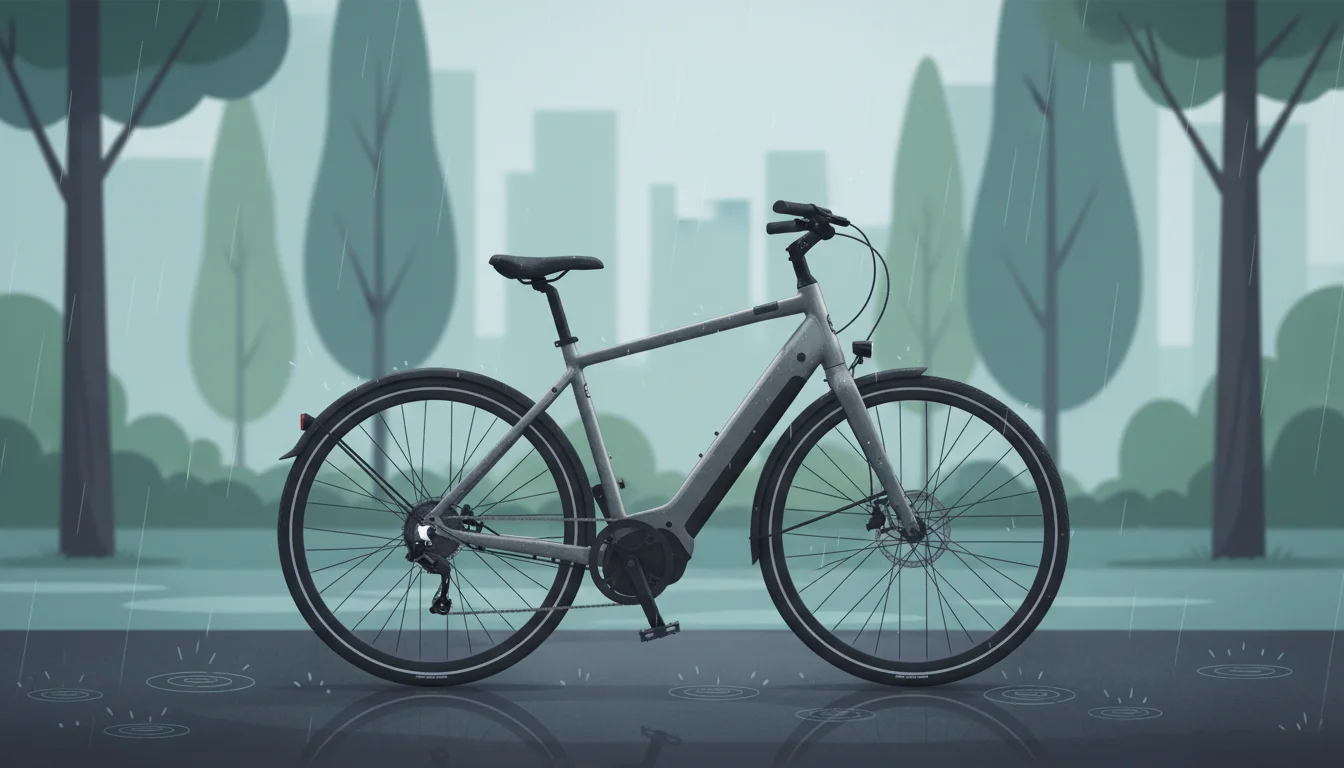
Understanding E-Bike Water Resistance: IPX Ratings Explained
The IPX rating system tells you exactly how much water exposure your e-bike can handle safely. The "X" replaces the dust protection digit, while the number indicates water resistance level from 0 (none) to 8 (submersion).
| IPX Rating | Protection Level | Real-World Riding Scenario |
|---|---|---|
| IPX0 | No protection | Indoor use only |
| IPX4 | Splash resistant from all directions | Light rain, wet roads |
| IPX5 | Low-pressure water jets | Moderate rain, puddle spray |
| IPX6 | Powerful water jets | Heavy rain, storm conditions |
| IPX7 | Immersion up to 1 meter | Accidental submersion |
| IPX8 | Extended submersion | Underwater conditions |
Most e-bikes ship with IPX4 or IPX5 ratings. You can find yours in the owner's manual, on the manufacturer's website, or printed near the battery compartment. IPX4 handles typical rain commutes without issue, while IPX6 serves as the benchmark for riders who face frequent storms.
An IPX4 rating means your e-bike survives splashing from any direction—but it does not mean waterproof. Submerging an IPX4-rated bike in a deep puddle risks water entering sealed compartments. Velotric notes their Discover 2 features IPX6 overall with IPX7 battery protection for riders wanting extra peace of mind.
Which E-Bike Components Are Most Vulnerable to Water
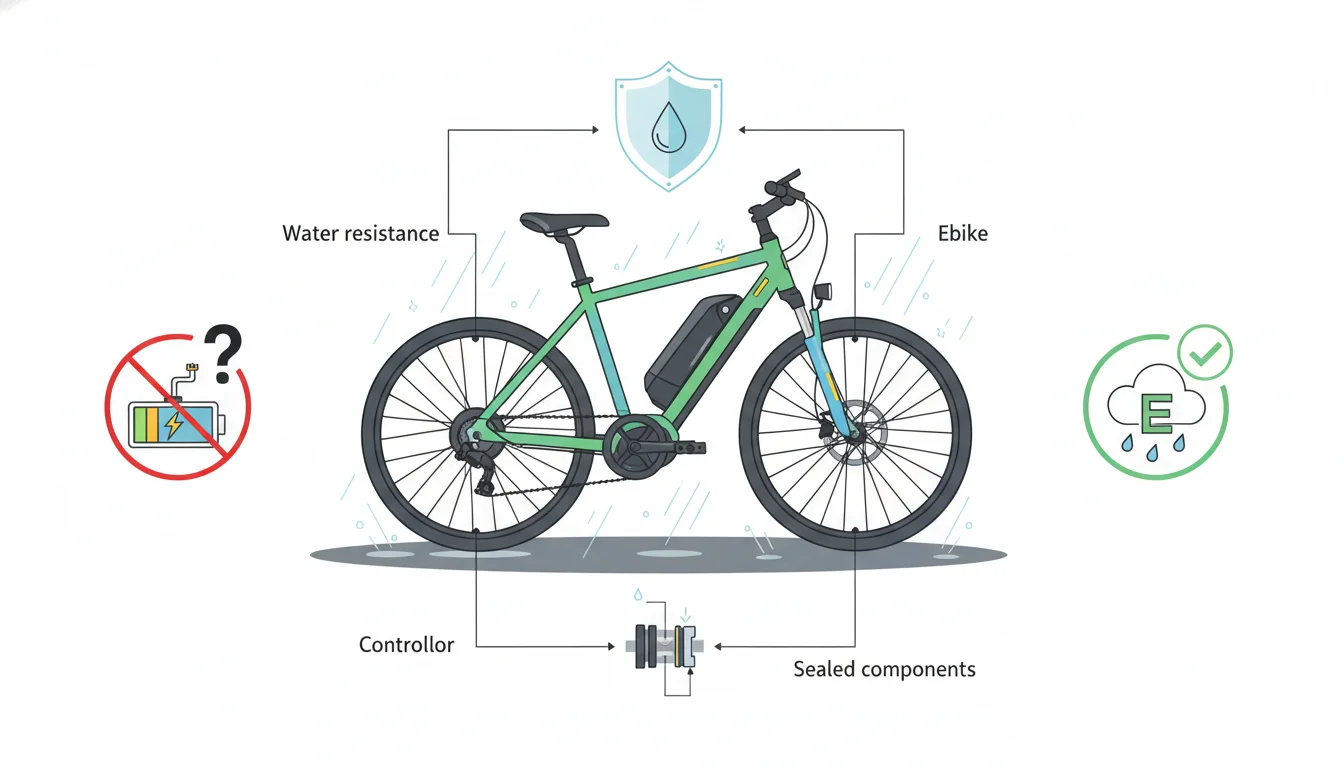
The battery, motor, display, and electrical connections present the highest risk during rain exposure. Manufacturers seal these components, but connection points remain the weak spots where water finds its way inside.
- Battery: Sealed housing protects internal cells. However, the charging port and terminal connections need attention since water pooling here causes corrosion over time.
- Motor: Hub motors sit exposed to road spray, while mid-drive motors mount higher but face water dripping down from above. Both types use seals that degrade with age.
- Display and Controls: Touchscreens and button panels sit directly in the rain's path. Water ingress here causes glitchy readings or complete failure.
- Charging Port: Often located low on the frame where puddle spray hits directly. Rubber covers wear out and lose their seal.
- Wiring Connections: Junction points throughout the frame allow water entry if connectors loosen from vibration.
Quality manufacturers use gaskets, O-rings, and conformal coatings on circuit boards. Budget e-bikes often skip these protections. I learned this the hard way when a $600 e-bike's display died after three rainy commutes. Check your e-bike's warranty coverage for water damage before assuming you're protected. [AIPAS Bike] emphasizes UL2271-certified batteries with IP65 ratings as the standard for reliable wet weather performance.
Safety Tips for Riding Your E-Bike in the Rain
Wet conditions demand adjusted riding techniques and heightened awareness. Braking distances increase by 25–40% on wet pavement, and traction drops significantly on certain surfaces.
- Start braking earlier: Disc brakes perform better than rim brakes when wet. Give yourself twice the stopping distance you normally use.
- Avoid slippery surfaces: Painted road markings, metal grates, manhole covers, wet leaves, and wooden bridges become skating rinks in rain.
- Maximize visibility: Run front and rear lights even during daytime. Wear a bright rain jacket, and add reflective strips to your helmet and bag to help drivers spot you.
- Reduce speed by 20–30%: Your tires grip less, and your reaction time needs padding. Slow down before it matters.
- Skip deep puddles: If you cannot see the bottom, assume it hides potholes or depths that could submerge your hub motor.
- Corner with caution: Lean less aggressively and keep your weight centered. Sudden movements break traction.
Fair warning: painted bike lane symbols become treacherous. I've had both wheels slide out after hitting a wet crosswalk stripe at normal commute speed. Now I treat every painted surface like ice. eBikes.org recommends lowering tire pressure by about 10 psi for an increased contact patch and better grip in wet conditions.
Pre-Ride Preparation for Rainy Conditions
Spending 10 minutes before a wet ride prevents hours of repair work later. A quick inspection catches problems before water makes them worse.
- Check the forecast: Light rain differs from thunderstorms. Know what you're riding into.
- Inspect tire tread: Worn tires lose grip fast on wet roads. Replace anything below 2mm tread depth.
- Lower tire pressure slightly: Drop 5–10 psi from your normal pressure. More rubber contacts the road.
- Secure all electrical connections: Wiggle each connector and snug them tight.
- Apply dielectric grease: A thin layer on battery terminals and display connectors blocks water and prevents corrosion.
- Install fenders: Mud guards keep road spray off you and off electrical components. Worth every penny.
- Charge fully: Wet conditions sometimes drain batteries faster. Start at 100%.
- Pack smart: Bring a waterproof bag for your phone and wallet, a rain jacket that breathes, and gloves with grip.
The dielectric grease tip transformed my rainy commute reliability. Three dollars of grease at the auto parts store ended the intermittent display flickering that plagued my wet rides. EVELO calls fenders "a simple but effective way to protect both the rider and the e-bike from water damage."
Post-Ride Maintenance: Protecting Your E-Bike After Rain Exposure
What you do in the first 30 minutes after a wet ride determines whether your e-bike suffers long-term damage. Water sitting on components causes corrosion, while water trapped inside causes failures.
- Dry immediately: Wipe down the entire bike with a clean, dry cloth. Focus on the battery area, display, and all connection points.
- Never pressure wash: High-pressure water forces past seals designed to stop splashes, not jets. Use a damp cloth instead.
- Dry the charging port: Inspect it closely and blow out any water droplets. Wait until completely dry before plugging in the charger.
- Check the battery compartment: Remove the battery if possible, wipe the contacts, and look for moisture inside the frame cavity.
- Lubricate the chain: Rain washes away chain lube. Apply fresh lubricant after the chain dries, then wipe off the excess.
- Store in a dry location: A wet e-bike in a cold garage invites rust and electrical problems. Bring it inside or use a dehumidified space.
- Schedule inspections: Frequent rain riders should have a shop check seals and connections every six months.
Trust me on the charging port check. Plugging a charger into a wet port creates a direct path for electrical damage. I now keep a small microfiber towel in my bag specifically for drying that port before heading inside. Engwe Bikes warns against charging in wet conditions and recommends always drying the battery and connectors first.
When You Should NOT Ride Your E-Bike in Rain
Some conditions push past what any water resistance rating handles safely. Knowing when to skip the ride protects both you and your investment.
- Thunderstorms: Lightning seeks the highest point. On a bike, that's you—metal frame, wet conditions, exposed position. Stay inside.
- Flash floods or standing water: Water above your hub motor level (typically 6–8 inches) submerges components not rated for submersion.
- Freezing rain: Ice forms on brake surfaces, tires, and the road. Traction disappears completely.
- Heavy downpours with poor visibility: If drivers struggle to see you, the risk outweighs the ride.
- Damaged seals or exposed wiring: Any compromise in your e-bike's water protection turns rain from manageable to destructive.
Let's be honest: no commute or errand justifies riding into a thunderstorm on a metal-framed vehicle. Check the radar and wait it out. Your e-bike will thank you.
FAQ
Does riding in rain void my e-bike warranty?
Most warranties cover normal wet weather riding but exclude water damage from submersion or pressure washing. Check your specific warranty terms for water-related exclusions before assuming coverage applies.
How long should I wait to charge my e-bike after riding in rain?
Wait until all components feel completely dry to the touch. This typically takes 30–60 minutes in a warm, dry environment. Rushing this step risks electrical damage.
Do I need special tires for wet weather e-bike riding?
Standard e-bike tires with adequate tread depth (2mm+) work fine in rain. Some riders prefer tires with siping (small grooves) for improved wet traction on paved surfaces.
Will rain affect my e-bike's range?
Wet conditions often reduce range by 5–15%. Cold rain has a bigger impact, and headwinds during storms drain batteries faster. Plan routes with charging access on longer wet rides.
Should I remove my battery when storing a wet e-bike?
Removing the battery allows both the battery and frame cavity to dry separately. This prevents trapped moisture from causing corrosion at connection points over time.
How often should I reapply dielectric grease to connections?
Reapply every 2–3 months for regular rain riders and check connections monthly. If you see any white oxidation on terminals, clean and reapply immediately.
Are hub motors or mid-drive motors better for rain riding?
Both handle rain adequately when properly sealed. Mid-drive motors sit higher, avoiding direct puddle spray, while hub motors face more exposure but use robust seals. Check IPX ratings rather than motor type when evaluating wet weather capability.
Share this post
Related Posts
Why Is My Ebike Throttle Not Working? 8 Common Causes and Fixes
Why Is My Ebike Throttle Not Working? 8 Common Causes and Fixes
Do You Need a Driver's License for an E-Bike? 2026 State-by-State Guide
Do You Need a Driver's License for an E-Bike? 2026 State-by-State Guide
How Does an E-Bike Conversion Kit Work? Complete Guide for 2026
How Does an E-Bike Conversion Kit Work? Complete Guide for 2026