Are E-Bikes Covered by Homeowners Insurance? What You Need to Know in 2026
E-bikes range from $1,500 to over $10,000, representing a significant investment that most owners assume their homeowners policy protects. However, insurance companies classify e-bikes as motorized vehicles, triggering exclusion clauses that leave nearly 800,000 annual U.S. e-bike buyers without adequate coverage. This guide explains exactly what your policy covers, where the gaps exist, and how to protect your investment.
Why Most Homeowners Insurance Excludes E-Bikes
Insurance companies treat your e-bike like a motorcycle, not a bicycle. The electric motor and battery transform your pedal-assist ride into a "motorized land vehicle" under standard policy language.
Key reasons insurers exclude e-bikes:
- Motor classification triggers exclusions. Any vehicle with an electric motor falls under motorized vehicle clauses, regardless of how you use it
- Standard policy language. Most homeowners policies explicitly exclude "motorized land vehicles" from personal property coverage
- Class 1 bikes aren't exempt. Even pedal-assist e-bikes limited to 750 watts and 20 mph face the same exclusions
- Liability risk concerns. E-bike incidents create injury and property damage claims similar to motor vehicles
An Allstate policy in California explicitly listed e-bikes under "property we do not cover" because they qualify as motorized land vehicles. This isn't unusual—BikeInsure found this pattern across major insurers nationwide.
The classification exists because whether e-bikes are covered by homeowners insurance depends entirely on how your specific policy defines motorized vehicles. Most definitions catch e-bikes in their net.
What Homeowners Insurance Actually Covers for E-Bikes
Your homeowners policy provides minimal e-bike protection, typically limited to specific theft scenarios with low payout caps.
| Coverage Type | What's Covered | Typical Limits | Key Restrictions |
|---|---|---|---|
| Theft from inside home | Bike stolen from living areas | $500-$1,000 | Garage and shed storage often excluded |
| Scheduled personal property | Named item coverage | Full declared value | Requires separate endorsement and premium |
| Standard personal property | General belongings coverage | Subject to motorized exclusion | E-bikes typically excluded entirely |
| Liability | Injuries you cause | $0 for e-bike incidents | Motorized vehicle exclusion applies |
Some insurers now offer workarounds. Lemonade covers certain pedal-assist e-bikes without throttles as scheduled personal property items. This adds your e-bike by name with a $0 deductible for covered losses.
Filing an e-bike claim under homeowners insurance carries risk. [USA Cycling] reports that claims increase premiums for several years and may jeopardize policy renewal.
Critical Coverage Gaps Every E-Bike Owner Faces
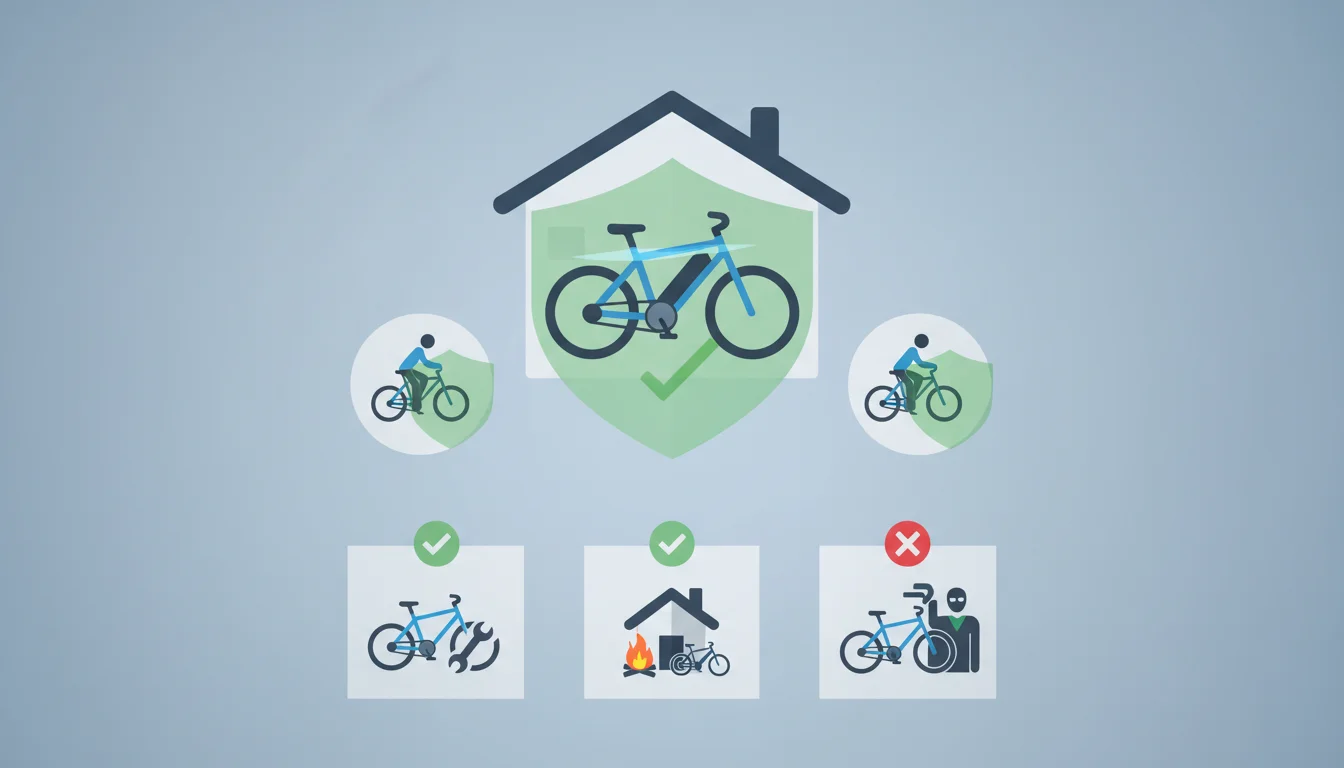
The gaps between what you need and what homeowners insurance provides create serious financial exposure.
Where you're unprotected:
- Theft away from home. Your locked e-bike at work, the coffee shop, or a bike rack has zero coverage
- Riding accidents. Collision damage while commuting or trail riding is excluded entirely
- Third-party liability. If you injure a pedestrian or damage a car, your homeowners policy won't pay
- Battery incidents. Fire, malfunction, or damage to electrical components faces automatic denial
- Vandalism and weather. Damage outside your home's interior living space isn't covered
The liability gap deserves special attention. SignatureFD notes that e-bike accidents causing bodily injury or property damage leave owners personally responsible for all costs. A single incident involving medical bills or vehicle damage can create five-figure exposure.
Dedicated E-Bike Insurance: Your Best Protection Option
Specialized e-bike policies fill every gap homeowners insurance creates, treating your bike like the valuable vehicle it is.
| Provider | Annual Cost Range | Key Features | Best For |
|---|---|---|---|
| Velosurance | $100-$300 | Worldwide theft, crash damage, liability, accessories | High-value bikes, frequent riders |
| Markel | $150-$350 | Comprehensive coverage, roadside assistance | Commuters needing reliability |
| Spoke Insurance | $100-$250 | Quick quotes, accessory coverage included | Budget-conscious owners |
| Sundays | $120-$280 | Medical payments, rental reimbursement | Riders wanting medical protection |
These policies work differently than homeowners coverage. PeopleForBikes explains that dedicated e-bike insurance treats your bike similarly to a motorcycle or ATV. Claims don't affect your homeowners rates.
Annual premiums of $100-$300 protect a $3,000+ investment. The math works: a single theft or liability claim exceeds decades of premium payments.
How to Assess Your E-Bike Coverage Needs
Your ideal coverage depends on how much you've invested and how you ride.
Questions to answer before choosing coverage:
- Total investment value. Add your e-bike purchase price plus accessories, upgrades, and modifications
- Riding patterns. Daily commuters face different risks than weekend trail riders
- Storage situation. Garage storage, apartment bike rooms, and outdoor racks carry different theft risks
- Current policy language. Request your declarations page and read the motorized vehicle exclusion section
- Self-insurance threshold. Determine the loss amount you could absorb without financial stress
Progressive recommends reviewing your homeowners policy's specific exclusion language. Some policies exclude all motorized vehicles, while others carve out exceptions for certain e-bike classes.
A $2,000 e-bike with $200 annual insurance costs breaks even if you prevent one theft over ten years. Most urban e-bike theft statistics suggest that timeline is optimistic.
Tips for Protecting Your E-Bike Investment
Physical security and documentation reduce your risk whether you buy dedicated insurance or not.
Protection strategies that work:
- Document everything. Photograph your e-bike from multiple angles, record serial numbers, and save purchase receipts in cloud storage
- Invest in quality locks. Spend 10-15% of your bike's value on locks, and use two different lock types together
- Add GPS tracking. Hidden trackers increase recovery rates, and some insurers offer discounts for tracked bikes
- Maintain properly. Regular service prevents damage claims and keeps your bike valuable for replacement calculations
- Review coverage annually. E-bike values depreciate while replacement costs often increase, so adjust coverage limits each year
[Mercury Insurance] emphasizes that documentation speeds claim processing. Insurers need proof of ownership and condition, and photos timestamped before an incident eliminate disputes.
FAQ
Does renters insurance cover e-bikes?
Renters insurance follows the same exclusion patterns as homeowners policies. Your e-bike is classified as a motorized vehicle and excluded from standard coverage. Some renters insurers now offer e-bike add-ons for pedal-assist models without throttles.
Do I need e-bike insurance if I only ride occasionally?
Theft risk exists whether you ride daily or monthly. Your e-bike sitting in storage still represents a valuable target. Occasional riders face lower accident liability risk but equal theft exposure.
Will my auto insurance cover my e-bike?
Auto insurance excludes e-bikes because they don't qualify as registered motor vehicles. Your auto policy defines covered vehicles as four-wheeled motor vehicles, so e-bikes fall into a gap between auto and homeowners coverage.
How do I add my e-bike to my homeowners policy?
Contact your insurance agent and request a scheduled personal property endorsement. Provide your e-bike's make, model, serial number, and purchase documentation. Expect premium increases and coverage limitations even with the endorsement.
What happens if my e-bike battery causes a fire?
Battery fires create complex claims. Homeowners policies exclude motorized vehicle components, which includes e-bike batteries. Dedicated e-bike insurance typically covers battery-related incidents, including fire damage.
Are Class 1, 2, and 3 e-bikes treated differently by insurers?
Most homeowners policies exclude all e-bike classes equally under motorized vehicle clauses. Dedicated e-bike insurers price policies based on bike class, with higher-speed Class 3 bikes costing more to insure than pedal-assist Class 1 models.
Can I get liability coverage for e-bike accidents?
Homeowners liability excludes motorized vehicle incidents. Dedicated e-bike policies include liability coverage for injuries you cause to others and property damage. This protection is essential for riders in pedestrian-heavy areas.
Share this post
Related Posts
Why Is My Ebike Throttle Not Working? 8 Common Causes and Fixes
Why Is My Ebike Throttle Not Working? 8 Common Causes and Fixes
Can E-Bikes Be Ridden in the Rain? Complete Guide to Wet Weather Riding in 2026
Can E-Bikes Be Ridden in the Rain? Complete Guide to Wet Weather Riding in 2026
Do You Need a Driver's License for an E-Bike? 2026 State-by-State Guide
Do You Need a Driver's License for an E-Bike? 2026 State-by-State Guide