How Does an E-Bike Conversion Kit Work? Complete Guide for 2026
An e-bike conversion kit transforms a standard bicycle into an electric bike by adding a motor, battery, controller, and sensors. Basic kits start around $300, while advanced systems reach $1,500. This guide covers how each component works, the three main kit types, installation requirements, and compatibility factors.
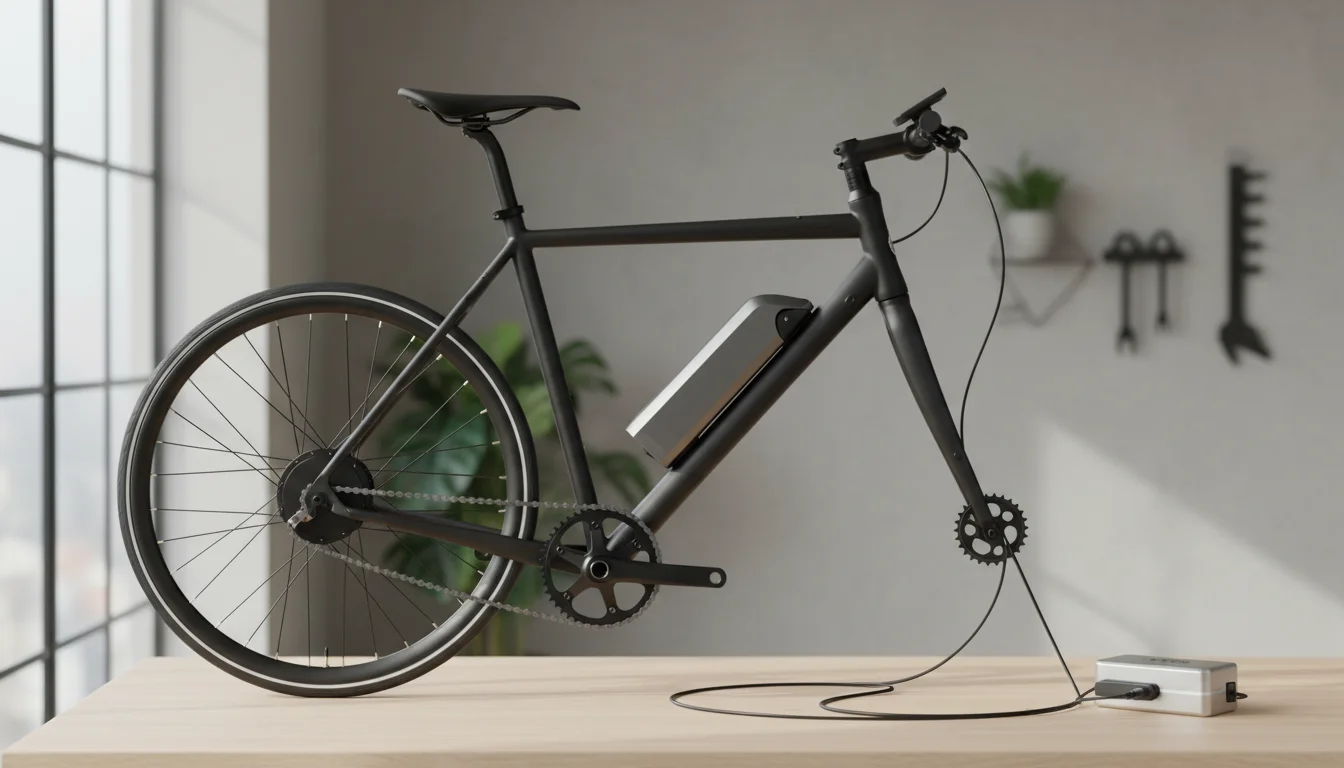
What Is an E-Bike Conversion Kit?
How does an e-bike conversion kit work? It adds electric propulsion to your existing bicycle through a modular system of components that provide pedal assistance or throttle-based power.
- Motor: Converts electrical energy into mechanical force, mounted on a wheel hub or at the crankset
- Battery: Stores energy in lithium-ion cells, typically 36V or 48V systems with capacity measured in watt-hours
- Controller: Regulates power flow between battery and motor based on rider input
- Sensors: Detect pedaling motion or force to trigger appropriate motor assistance
- Display and throttle: Allow mode selection, speed monitoring, and direct motor control
The difference from buying a pre-built e-bike comes down to flexibility and cost. A quality conversion kit runs $300 to $1,000, while new e-bikes start at $1,500 and climb past $3,000.
Riders choose conversion for three reasons: they want to keep a bike that fits them perfectly, they prefer spending less money, and they value the ability to upgrade individual components later. "Conversion kits are a game-changer for cyclists who want to electrify their rides without breaking the bank or giving up their favorite bike," notes eBikeling.
Key Components and How They Work Together
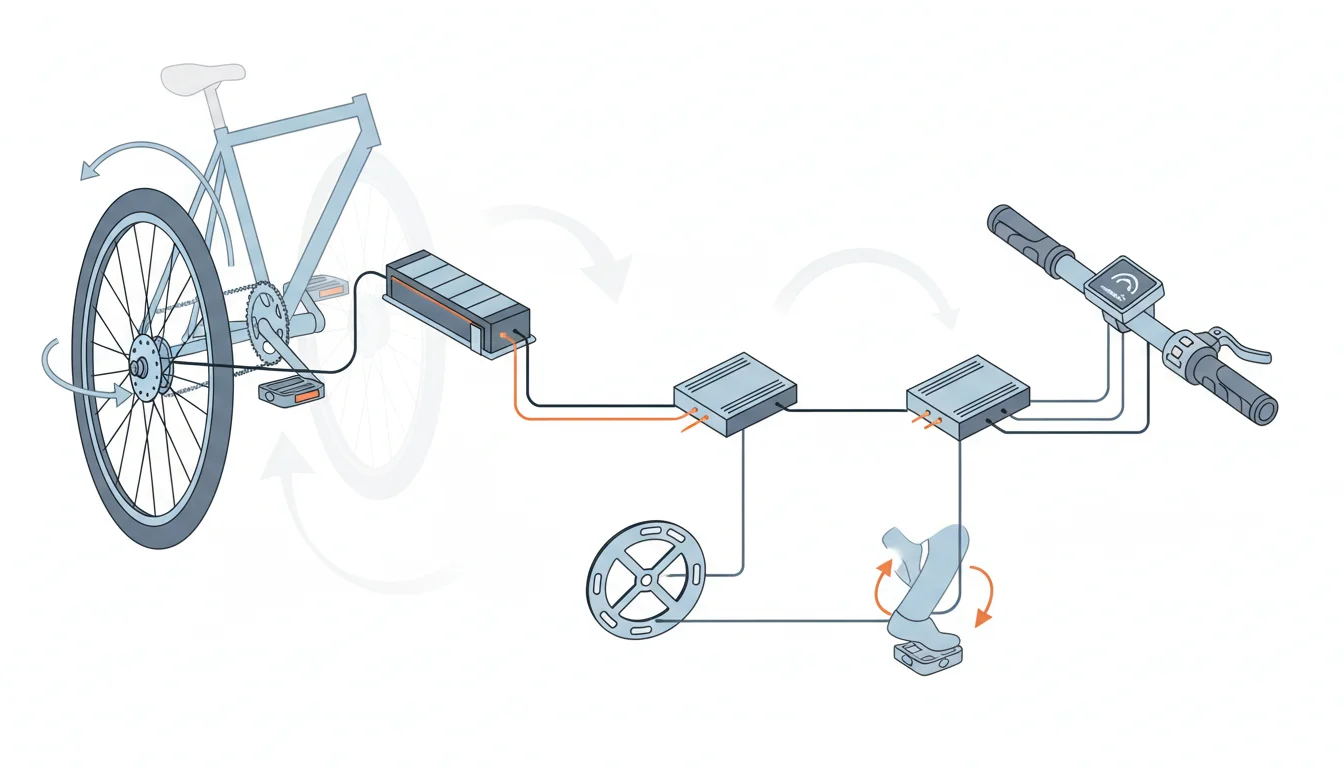
The system creates a feedback loop that delivers smooth, responsive assistance matched to your riding effort.
When you start pedaling, the pedal assist sensor detects rotation and sends a signal to the controller. The controller interprets this signal alongside your selected assistance level, then draws power from the battery and delivers precisely metered electricity to the motor.
- E-bike motor: Wattage ranges from 250W for legal road use to 1000W+ for off-road power. Higher wattage means more torque and speed capability.
- E-bike battery: Capacity determines range. A 500Wh battery provides roughly 25–50 miles depending on terrain and assistance level.
- E-bike controller: Processes signals from sensors, throttle, and brake cutoffs up to 1,000 times per second.
- Pedal assist sensor: Cadence sensors detect rotation, while torque sensors measure actual pedaling force for a more natural response.
- Brake sensors: Cut motor power instantly when you squeeze the levers—essential for safety.
The display shows real-time data: speed, distance, battery percentage, and current assist mode. Most systems offer 3–5 assistance levels. Level 1 adds gentle support, while Level 5 provides maximum boost.
Types of E-Bike Conversion Kits Explained
Three main types exist, each with distinct advantages for different riding styles and installation comfort levels.
| Kit Type | Power Delivery | Weight Distribution | Installation Difficulty | Best For |
|---|---|---|---|---|
| Front hub motor | Direct to front wheel | Front-heavy | Easy (2–3 hours) | Casual commuting, flat terrain |
| Rear hub motor | Direct to rear wheel | Rear-heavy | Moderate (3–4 hours) | Commuting, moderate hills |
| Mid-drive motor | Through bike's gears | Centered, low | Complex (4–6 hours) | Hills, off-road, performance |
Hub motor conversion kits replace your existing wheel with a motorized version. Direct drive hubs offer simplicity and regenerative braking, while geared hubs provide better torque at lower speeds and weigh less. Front hub motors are easiest to install since they don't interact with your drivetrain. Rear hub motors deliver better traction but require cassette transfer.
Mid-drive conversion kits mount at the bottom bracket, powering your existing chain and gears. This placement keeps weight centered and low. The motor leverages your gear ratios, making it far more efficient on climbs. A mid-drive in low gear conquers hills that would stall a hub motor.
Friction drive kits press a roller against your tire. They're lightweight and removable but wear tires faster, and wet conditions reduce their effectiveness significantly. Few serious riders choose this option.
For daily commuting on flat ground, a rear hub motor hits the sweet spot. For hilly terrain or mountain biking, mid-drive wins decisively.
Installation Basics: What to Expect
Hub motor installation takes 2–4 hours for someone with basic mechanical skills. Mid-drive systems require 4–6 hours and more technical knowledge.
Hub motor installation steps:
- Remove the existing wheel and transfer tire, tube, and cassette to the motorized wheel
- Mount the wheel in dropouts, ensuring proper disc brake alignment
- Attach the torque arm to prevent axle spin under power
- Install the battery mount on the frame downtube or rear rack
- Run wiring from motor to controller, battery, display, and sensors
- Mount throttle, display, and brake sensors on handlebars
- Secure all cables with zip ties for clean routing
Mid-drive installation adds complexity:
- Remove the crankset and bottom bracket entirely
- Install the motor unit into the bottom bracket shell
- Attach the new chainring and route the chain through the motor
- Mount the PAS sensor on the crank arm
- Complete electrical connections
Tools you'll need: Allen key set, pedal wrench, bottom bracket tool (for mid-drive), torque wrench, tire levers, cable ties, and a 15mm wrench. A bike repair stand makes everything easier.
Seek professional installation when dealing with carbon frames, internal cable routing, or unusual bottom bracket standards. The $50–160 installation fee buys peace of mind and proper torque specs. Instructables offers detailed DIY guidance for confident home mechanics.
Bike Compatibility: Will Your Bike Work?
Most steel and aluminum frames handle conversion well. Carbon fiber requires extreme caution because mounting stress and motor torque create failure risks.
Frame considerations:
- Steel frames are most forgiving—they flex slightly under load and handle mounting hardware well.
- Aluminum works fine but requires careful torque arm installation.
- Carbon fiber frames are risky. Some riders convert them successfully, while others crack frames worth more than the kit.
Critical measurements:
- Dropout width: Rear hubs need 135mm (standard) or 142mm (thru-axle). Front hubs fit 100mm forks.
- Bottom bracket: Mid-drives require 68–73mm BSA threading for most kits. Press-fit brackets need adapters or different kit models.
- Wheel size: Most kits fit 26", 27.5", and 700c wheels. Confirm before ordering.
Brake compatibility matters. Disc brakes work best because motor wheels come pre-laced to disc-compatible hubs. Rim brake bikes work with some kits but limit your options.
Bikes that convert well: Rigid mountain bikes, hybrid commuters, steel touring bikes, and hardtails. Bikes to avoid: Full-suspension mountain bikes (motor mounting conflicts with suspension), carbon road bikes (fragility), and bikes with internal gearing (hub motor conflicts).
Cost Considerations and Value Comparison
Kit pricing follows a clear pattern based on motor type, battery capacity, and component quality.
| Price Range | What You Get | Typical Specs |
|---|---|---|
| $200–400 | Basic hub motor kit | 250–500W, 36V 10Ah battery, cadence sensor |
| $400–800 | Quality hub motor kit | 500–750W, 48V 13Ah battery, LCD display, torque sensor option |
| $800–1,500+ | Mid-drive or premium hub | 750–1000W, 48V 17Ah+ battery, torque sensor, advanced display |
Professional installation adds $50–160. Battery replacement costs $200–400 every 3–5 years depending on use.
When conversion makes sense: You own a quality bike worth keeping, you want customization options, you're comfortable with basic bike maintenance, and your budget sits below $1,000.
When buying new makes sense: You want warranty coverage, you prefer integrated designs, you don't own a suitable donor bike, or your local shop offers financing on complete e-bikes.
A $600 conversion on a $400 bike delivers comparable performance to a $1,500 entry-level e-bike. That math works for most riders. EMovement breaks down the full cost analysis for UK buyers.
FAQ
How fast will my converted e-bike go?
Speed depends on motor wattage and local regulations. Most 500W kits reach 20 mph, while higher wattage systems hit 28 mph or more. Class limits vary by region.
How far can I ride on one battery charge?
Range varies from 20–60 miles based on battery capacity, terrain, rider weight, and assistance level. A 500Wh battery averages 30–40 miles with moderate pedal assist.
Will the conversion void my bike's warranty?
Yes, most manufacturers void frame warranties after conversion. The modification changes stress patterns on the frame. Buy kits with their own warranty coverage.
Can I remove the kit and restore my original bike?
Hub motor kits are fully reversible—just keep your original wheel. Mid-drive removal is possible but more involved, and the bottom bracket may show wear marks.
Do I need to register or insure my converted e-bike?
Regulations depend on your location and motor power. Most areas treat sub-750W pedal-assist bikes as regular bicycles. Throttle-only or high-power builds may require registration.
How long does the battery last before needing replacement?
Quality lithium-ion batteries maintain 80% capacity for 500–1,000 charge cycles. With typical use, expect 3–5 years before noticeable range reduction.
What maintenance does a converted e-bike require?
Check electrical connections monthly. Keep the battery charged between 20–80% for longevity. Standard bike maintenance applies: chain lubrication, brake adjustment, and tire pressure. Motor hubs are sealed and maintenance-free.
Is a front or rear hub motor better for beginners?
Front hub motors offer simpler installation and don't interfere with your drivetrain. Rear hubs provide better traction and more natural power delivery. Start with a rear hub unless installation complexity concerns you.
Share this post
Related Posts
Why Is My Ebike Throttle Not Working? 8 Common Causes and Fixes
Why Is My Ebike Throttle Not Working? 8 Common Causes and Fixes
Can E-Bikes Be Ridden in the Rain? Complete Guide to Wet Weather Riding in 2026
Can E-Bikes Be Ridden in the Rain? Complete Guide to Wet Weather Riding in 2026
Do You Need a Driver's License for an E-Bike? 2026 State-by-State Guide
Do You Need a Driver's License for an E-Bike? 2026 State-by-State Guide