Can Ebikes Go Up Steep Hills? Motor Power, Torque & What You Need to Know in 2026
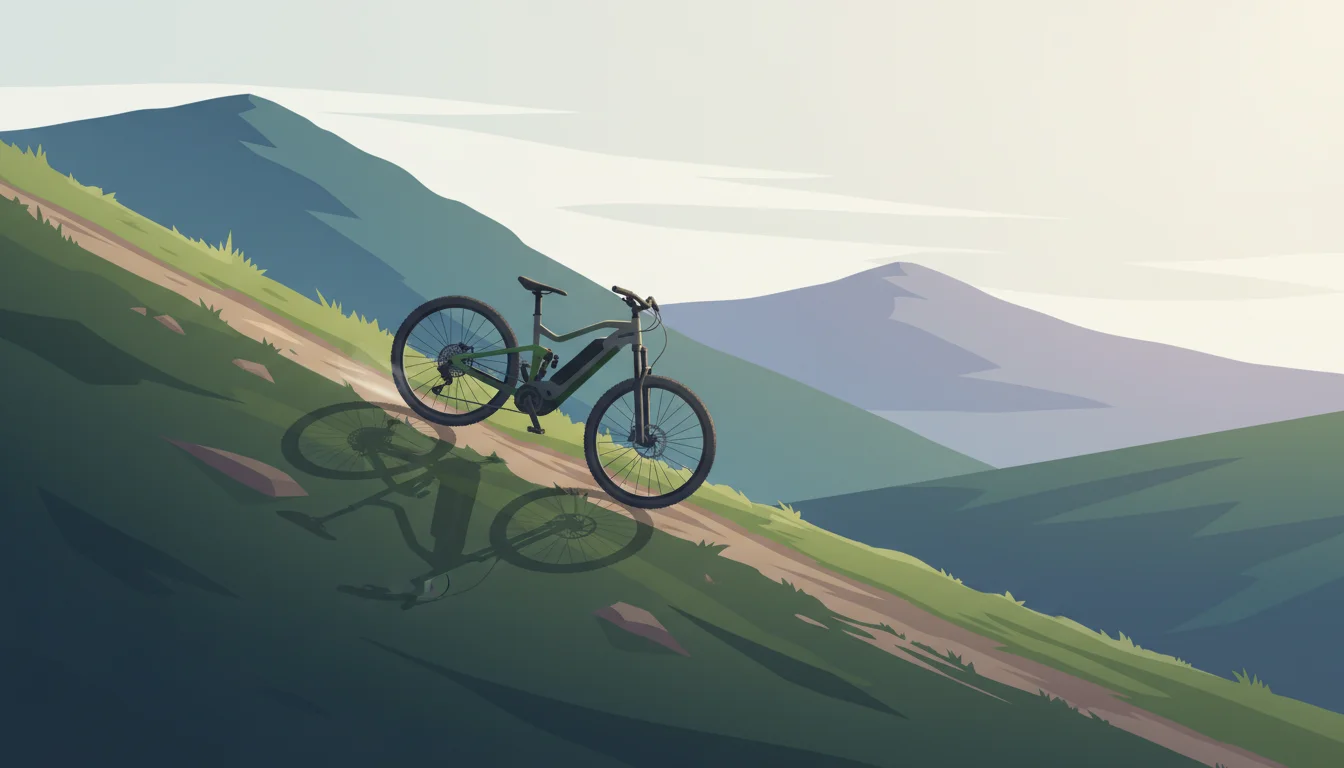
Electric bikes climb steep hills effectively when equipped with the right motor power, torque, and configuration. Quality ebikes with 500W+ motors and 60Nm+ torque handle 10-15% grades with ease, while high-performance models conquer 20%+ gradients. This guide breaks down exactly what specs you need for your local terrain.
How Motor Wattage Affects Hill Climbing Performance
Can ebikes go up steep hills with a basic motor? Yes, but wattage determines how steep you can climb and how long you can sustain the effort comfortably. A 350W motor handles moderate 10% grades, while a 750W motor powers through 20%+ gradients without breaking a sweat.
| Motor Wattage | Maximum Grade | Best For | Limitations |
|---|---|---|---|
| 350W | Up to 10% | Flat terrain with occasional small hills | Struggles with heavier riders, sustained climbs |
| 500W | 12-15% | Regular recreational hill climbing | May slow on extended steep sections |
| 750W | 15-20% | Serious hill climbing, heavier riders | Higher battery consumption |
| 1000W+ | 20-30% | Extreme terrain, cargo hauling | Often exceeds legal limits in some regions |
The 500W sweet spot works for most riders facing typical suburban and urban hills. If your commute includes San Francisco-style gradients, jump to 750W at minimum.
Fair warning: wattage alone tells only part of the story. A 750W motor with weak torque will disappoint you on steep climbs. The next section explains why torque matters more than the wattage number on the spec sheet. Movcan confirms that 500W-1000W motors handle sustained climbs best.
Why Torque Matters More Than Speed for Steep Inclines
Torque is the rotational force that actually pushes you uphill. A motor with high wattage but low torque spins fast on flat ground yet stalls on steep grades. Torque wins the hill climbing battle every time.
| Terrain Type | Minimum Torque | What It Feels Like |
|---|---|---|
| Flat urban riding | 40-50 Nm | Smooth, effortless cruising |
| Moderate hills (10-15%) | 60-80 Nm | Noticeable assist, maintains speed |
| Steep hills (20%+) | 80-100+ Nm | Powerful pull, climbs without struggle |
Here's something I wish someone had told me earlier: a 250W mid-drive motor with 90Nm torque will outclimb a 750W hub motor with 55Nm torque. Every single time.
Rider weight changes the equation significantly. Add 10Nm to your minimum requirement for every 20 lbs over 180 lbs of combined rider and bike weight. A 220 lb rider needs roughly 20Nm more than the baseline recommendations. HOVSCO notes that motors under 70Nm struggle on grades above 15%.
Mid-Drive vs Hub Motor: Which Climbs Hills Better?
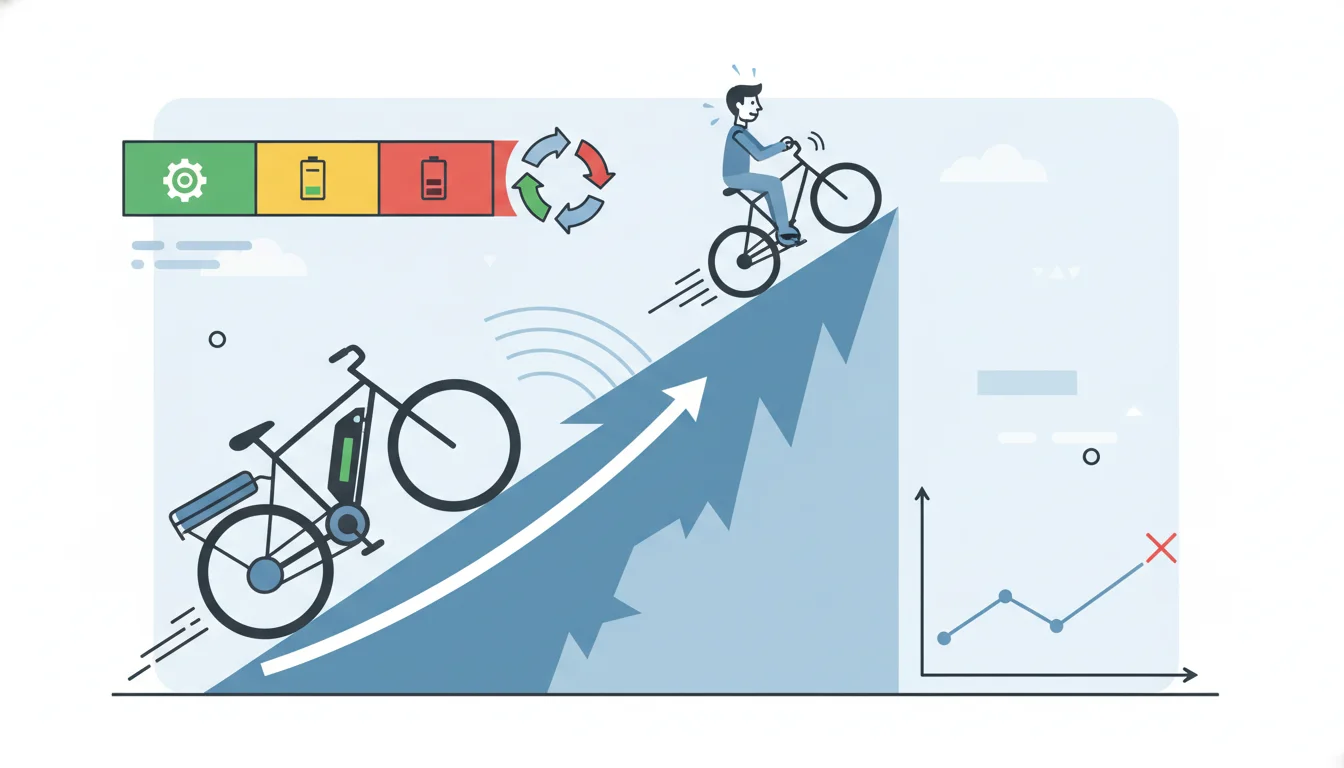
Mid-drive motors dominate hill climbing because they use the bike's gears. Shifting to a lower gear multiplies the motor's torque at the wheel, giving you a mechanical advantage that hub motors simply lack.
| Feature | Mid-Drive Motor | Rear Hub Motor | Front Hub Motor |
|---|---|---|---|
| Hill climbing ability | Excellent | Good | Poor |
| Torque output | 70-120 Nm typical | 30-60 Nm typical | 30-50 Nm typical |
| Heat management | Superior | Overheats on long climbs | Overheats quickly |
| Uses bike gears | Yes | No | No |
| Weight distribution | Centered, balanced | Rear-heavy | Front-heavy |
| Price premium | $500-1000 more | Baseline | Baseline |
| Maintenance needs | Higher drivetrain wear | Lower | Lower |
The price difference stings, but mid-drive systems earn it on every climb. Your chain and cassette will wear faster from the added stress, so budget for replacements every 2,000-3,000 miles if you ride hills frequently.
Front hub motors are a hard pass for steep terrain. Traction suffers when weight shifts rearward on climbs, and frame stress becomes a real concern. EVELO explains that mid-drive motors let both your legs and the motor work in parallel through the gears.
Maximum Gradient: What Percentage Incline Can Ebikes Handle?
Most quality ebikes handle 15-20% grades with pedal assist engaged. Premium models push into 25-30% territory for short bursts. Your local "steep hill" is probably around 10-12%, which any decent ebike manages easily.
| Grade Percentage | Real-World Example | Ebike Capability |
|---|---|---|
| 5-8% | Typical highway overpass | All ebikes handle easily |
| 10-12% | Steep residential street | Most quality ebikes comfortable |
| 15-17% | Very challenging road | Mid-drive with 70+ Nm needed |
| 20-25% | San Francisco steep streets | High-performance ebikes only |
| 30%+ | Extreme mountain trails | Specialized ebikes, short bursts |
Let's be honest about what these numbers feel like. A 10% grade makes you breathe hard on a regular bike. A 15% grade makes your thighs burn. A 20% grade makes you question your life choices. Ebikes change all of that.
Sustained climbing differs from burst climbing. Your ebike might power up a 25% grade for 30 seconds but struggle to maintain that effort for 5 minutes. Battery drain and motor heat become the limiting factors. Urtopia recommends 80Nm+ torque for gradients of 20% or steeper.
Battery Performance and Range When Climbing Hills
Expect your range to drop 30-50% when riding hilly terrain compared to flat ground estimates. That 50-mile rated range becomes 25-35 miles in the hills. Plan accordingly, or you'll be pedaling a 60-pound bike home.
- 500Wh battery: Minimum for regular hill climbing, handles 20-30 miles of hilly terrain
- 700Wh+ battery: Extended hilly rides, comfortable margin for unexpected climbs
- Dual battery setups: Long mountain adventures, 50+ miles of challenging terrain
Trust me on this: running out of battery mid-climb is miserable. The bike becomes dead weight you're fighting uphill. I learned this lesson on a 15% grade two miles from home.
Frequent hill climbing under maximum assist accelerates battery degradation over time. The cells work harder and run hotter, so you might see 10-15% capacity loss after 300-400 charge cycles instead of the typical 500+. Save your highest assist levels for when you truly need them. Macfox emphasizes that larger batteries (500Wh+) reduce the risk of running out mid-ascent.
Throttle vs Pedal Assist: Best Approach for Hill Climbing
Pedal assist delivers superior hill climbing efficiency. Your legs contribute power while the motor amplifies your effort. Pure throttle drains batteries 40-60% faster and risks overheating hub motors on sustained climbs.
- Pedal assist levels 3-4: Optimal for most steep sections, balances power and range
- Pedal assist level 5: Reserve for the steepest pitches, maximum drain
- Throttle-only: Short steep bursts under 30 seconds, starting from a stop
- Combined approach: Throttle to launch, then pedal assist to maintain momentum
Here's what works in practice: shift to a lower gear before the climb starts, maintain a steady 60-70 RPM cadence, and use assist level 3-4 for most of the climb. Bump to level 5 only for the steepest sections.
Even light pedaling makes a dramatic difference. Contributing 50 watts of leg power through easy spinning extends your motor's capabilities and prevents overheating. Your fitness level matters less than maintaining that steady input. Optibike notes that the synergy between motor torque, gearing, and rider input is the real secret to conquering hills.
FAQ
What happens if my ebike battery dies on a steep hill?
You'll be pedaling a 50-70 pound bicycle uphill. Most ebikes remain rideable without power, but the weight makes climbing extremely difficult. Walk the bike if necessary, and plan routes with charging options.
Do I need a special ebike for San Francisco-style hills?
San Francisco's steepest streets hit 17-31% grades. You need a mid-drive motor with 80+ Nm torque and at least 500W power. Budget models with hub motors will struggle or fail on these gradients.
How much does rider weight affect hill climbing?
Significantly. A 220 lb rider needs roughly 20% more torque than a 160 lb rider to climb the same grade at the same speed. Heavier riders should prioritize 80+ Nm torque and 750W motors for reliable performance.
Will hill climbing damage my ebike motor?
Normal hill climbing won't damage a quality motor. Sustained full-throttle climbs on hub motors risk overheating, while mid-drive motors handle heat better but increase drivetrain wear. Follow manufacturer guidelines for continuous climbing limits.
Can I add more power to my existing ebike for better hill climbing?
Upgrading motors requires professional installation and may void warranties. Easier improvements include reducing weight, optimizing tire pressure (lower for traction), and using proper gearing technique. Some bikes accept higher-capacity batteries.
What's the best tire pressure for climbing steep hills?
Lower pressure by 5-10 PSI from your flat-ground setting. This increases traction on steep grades. However, going too low causes sluggish handling and increased battery drain on flat sections. Experiment to find your ideal balance.
How do ebikes compare to regular bikes on steep hills?
A fit cyclist on a road bike might average 8-10 mph on a 10% grade. An average rider on a quality ebike maintains 12-15 mph on the same grade with moderate effort. The gap widens on steeper terrain, where ebikes truly shine.
Share this post
Related Posts
Why Is My Ebike Throttle Not Working? 8 Common Causes and Fixes
Why Is My Ebike Throttle Not Working? 8 Common Causes and Fixes
Can E-Bikes Be Ridden in the Rain? Complete Guide to Wet Weather Riding in 2026
Can E-Bikes Be Ridden in the Rain? Complete Guide to Wet Weather Riding in 2026
Do You Need a Driver's License for an E-Bike? 2026 State-by-State Guide
Do You Need a Driver's License for an E-Bike? 2026 State-by-State Guide