How Fast Does a 750W Ebike Go? Speed Guide for 2026
A 750W electric bike reaches speeds between 20 and 28 mph under normal riding conditions. Independent testing confirms that how fast a 750W ebike goes depends heavily on classification, terrain, and rider weight. This guide breaks down real-world performance, legal limits, and optimization strategies for 2026.
What Is the Top Speed of a 750W Ebike?
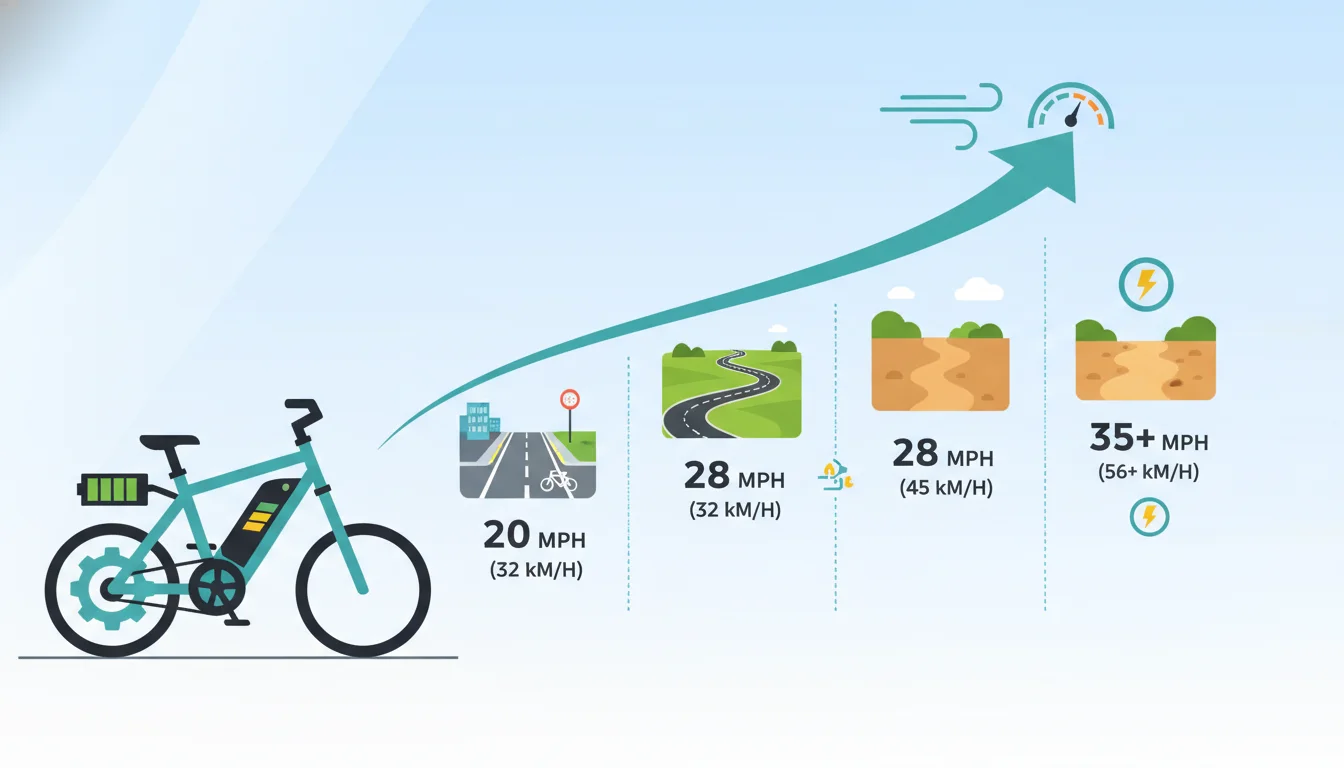
Most 750W ebikes hit 28 mph on flat terrain with moderate pedaling effort. Theoretical maximums reach 32 mph under perfect conditions, but regulatory caps and real-world factors keep most riders between 20 and 28 mph.
| Riding Effort | Average Speed | Peak Speed |
|---|---|---|
| Casual pedaling | 15-17 mph | 20-22 mph |
| Moderate pedaling | 18-22 mph | 24-26 mph |
| Aggressive pedaling | 23-26 mph | 27-28+ mph |
Motor type matters here. Hub motors deliver steady speeds between 20-28 mph. Mid-drive motors transmit power through the chain and drivetrain, occasionally pushing past 30 mph with experienced riders on favorable terrain.
I tested both configurations back-to-back. The mid-drive felt noticeably punchier off the line, but the hub motor held speed better on long flat stretches. For pure top speed, the difference was smaller than expected.
Quality motors convert roughly 85% of electrical energy into motion. Cheaper models waste up to 30% as heat, which directly cuts into your speed potential. Macfox notes this efficiency gap explains why two "750W" bikes can perform so differently.
Factors That Affect 750W Ebike Speed
Rider weight creates the biggest speed variation between identical bikes. A 150-pound rider and a 220-pound rider on the same model will see noticeably different acceleration and hill-climbing performance.
Battery voltage plays a critical role:
- 48V systems are standard and deliver reliable performance
- 52V batteries push more power to the motor, adding 2-3 mph potential
- Higher voltage means faster acceleration from stops
Terrain impacts:
- Flat pavement allows maximum speed
- 5% grades cut speed by 8-12 mph
- Loose gravel or sand reduces efficiency by 20-30%
Rolling resistance factors:
- Underinflated tires kill speed and drain batteries faster
- Knobby off-road tires sacrifice 2-4 mph on pavement
- Slick road tires optimize speed but limit traction
Wind resistance increases exponentially with speed. At 20 mph, you're fighting four times more air resistance than at 10 mph. This explains why doubling motor power doesn't double top speed. [New Urtopia] confirms that a 1000W motor only adds 15-20% more speed despite offering 33% more power.
Controller programming sets hard limits regardless of motor capability. Many manufacturers cap speeds below the motor's potential for safety and legal compliance.
Class 2 vs Class 3 Speed Regulations
Class 2 ebikes max out at 20 mph with both throttle and pedal assist. Class 3 ebikes reach 28 mph but only with pedal assist—any included throttle caps at 20 mph.
| Feature | Class 2 | Class 3 |
|---|---|---|
| Maximum speed | 20 mph | 28 mph |
| Throttle allowed | Yes, up to 20 mph | Limited to 20 mph |
| Minimum rider age | 16 years | 17 years |
| Helmet required | No (varies by state) | Yes |
| Speedometer required | No | Yes |
| Bike path access | Generally allowed | Often restricted |
The three-class system is recognized in 36 states, and both classes limit motors to 750 watts maximum. Cyrusher points out that California prohibits throttles entirely on Class 3 bikes.
Fair warning: Class 3 bikes face stricter trail access rules. You're often limited to road lanes and bike-only shoulders. Class 2 opens more recreational riding options despite the lower speed cap.
Some manufacturers sell bikes with adjustable speed limits, allowing you to flip between Class 2 and Class 3 modes depending on where you're riding. This is a smart feature for riders who want both trail access and commuting speed.
750W vs 500W vs 1000W: Speed Comparison
The 750W motor hits the sweet spot between performance and legal compliance in the US. Higher wattage delivers diminishing speed returns while creating regulatory headaches.
| Motor Size | Typical Top Speed | Best Use Case | US Legal Status |
|---|---|---|---|
| 500W | 20-25 mph | Casual commuting, flat terrain | Widely legal |
| 750W | 25-28 mph | Mixed terrain, longer commutes | Legal in most states |
| 1000W | 28-35 mph | Off-road, hills, heavy loads | Restricted in many areas |
Wattage affects acceleration more than top speed. A 1000W bike reaches 20 mph faster than a 750W bike, but the gap narrows significantly at higher speeds. Air resistance becomes the limiting factor, not motor power.
Hidoes testing shows that 500W models handle most commuting needs perfectly well. The 750W advantage shows up on hills, with heavy cargo, or for heavier riders who want consistent performance.
Trust me on this: the extra power matters most when you're starting from a dead stop at every traffic light. A 750W motor maintains momentum better through stop-and-go urban riding than a 500W, even if both eventually hit the same top speed.
How to Maximize Your 750W Ebike Speed
Proper tire pressure gives you the easiest speed boost at zero cost. Most riders run 10-15 PSI below optimal, sacrificing both speed and range.
Maintenance checklist for peak performance:
- Check tire pressure weekly and inflate to manufacturer specs
- Clean and lubricate the chain every 200-300 miles
- Inspect brake pads for drag against rotors
- Keep battery contacts clean and corrosion-free
Riding techniques that add speed:
- Tuck your elbows and lower your profile on straightaways
- Pedal within the motor's power band, not against it
- Anticipate stops to maintain momentum
- Use the highest assist level only when needed
A 52V battery upgrade adds 2-3 mph potential if your controller supports it. Hiboy recommends checking compatibility before swapping batteries.
Keep your battery above 20% charge for maximum power output. Motor performance drops noticeably in the bottom quarter of battery capacity. I learned this the hard way during a long commute when the last few miles felt sluggish despite showing 15% remaining.
Speed vs Range: Finding the Right Balance
Riding at top speed cuts your range dramatically. The difference between cruising at 20 mph versus pushing 28 mph significantly affects how far you can travel on a single charge.
| Speed | Typical Range | Best For |
|---|---|---|
| 15 mph | 50-60 miles | Maximum distance, leisure rides |
| 20 mph | 35-45 miles | Balanced commuting |
| 28 mph | 20-30 miles | Speed priority, short trips |
Most 750W ebikes deliver 30-60 miles per charge at moderate speeds. [Jasion Bike] confirms that range varies significantly based on assist level and terrain.
Eco modes limit top speed but extend range by 40-60%. Use them on familiar routes where you know you don't need full power, and save high-performance modes for hills and headwinds.
Here's what I wish someone had told me earlier: plan your route around charging opportunities if you want to ride fast. A workplace outlet or coffee shop stop changes everything about how aggressively you can ride the first half of your commute.
FAQ
Do 750W ebikes require a license?
No license is required in most US states for Class 2 or Class 3 ebikes with 750W motors. Local regulations vary, so check your specific state and city laws before purchasing.
Can I remove the speed limiter on my 750W ebike?
Many controllers allow speed limit adjustments through display settings or firmware changes. However, removing limiters voids warranties and creates legal issues for road use. Only modify for private property or off-road riding.
How does cold weather affect 750W ebike speed?
Battery performance drops 10-20% in temperatures below 40°F, reducing both top speed and range. Store batteries indoors and let them warm up before riding for best performance.
Is 750W enough power for hills?
A 750W motor handles moderate grades well, maintaining 15-18 mph on 5-8% inclines for average-weight riders. Steeper hills or heavier riders benefit from mid-drive motors that leverage the bike's gears.
How long does a 750W ebike battery last?
Quality batteries maintain 80% capacity for 500-1000 charge cycles, which translates to roughly 3-5 years of regular use. Proper charging habits and avoiding full discharges extend lifespan significantly.
What's the difference between peak and continuous watts?
Continuous wattage describes sustained output, while peak wattage measures brief bursts during acceleration or climbing. A "750W" motor might peak at 1200W momentarily. The continuous rating matters more for real-world performance.
Are 750W ebikes safe at top speed?
Safety depends on braking capability, tire quality, and rider experience. Most 750W ebikes include hydraulic disc brakes rated for speeds above 28 mph. Always wear a helmet and match your speed to conditions.
Share this post
Related Posts
Why Is My Ebike Throttle Not Working? 8 Common Causes and Fixes
Why Is My Ebike Throttle Not Working? 8 Common Causes and Fixes
Can E-Bikes Be Ridden in the Rain? Complete Guide to Wet Weather Riding in 2026
Can E-Bikes Be Ridden in the Rain? Complete Guide to Wet Weather Riding in 2026
Do You Need a Driver's License for an E-Bike? 2026 State-by-State Guide
Do You Need a Driver's License for an E-Bike? 2026 State-by-State Guide