When Do Ebike Batteries Catch Fire? Causes, Warning Signs & Prevention
Ebike battery fires result from lithium-ion cell failures triggered by charging faults, physical damage, or defective components. New York City recorded 267 ebike fires in 2023, causing 18 deaths and 150 injuries. This article covers the specific timing of fires, root causes, warning signs, and prevention strategies.
When Are Ebike Batteries Most Likely to Catch Fire?
When do ebike batteries catch fire most often? During charging. This single activity accounts for the majority of incidents because faulty equipment, damaged cells, and overloaded circuits combine to create ignition conditions.
High-risk periods include:
- During charging with damaged batteries or incompatible chargers
- Immediately after full charge when cells hold maximum energy at elevated temperatures
- After physical impacts from drops, crashes, or collisions that compromise internal structure
- During extreme temperature storage in hot cars or freezing garages
- While riding under heavy stress with an already degraded battery
The charging window demands your full attention. China documented 799 fires from ebike charging between 2011 and 2013, killing 95 people. This pattern repeats globally.
Post-charge fires catch owners off guard. Your battery holds maximum energy at its hottest point. If the charger malfunctions or the BMS fails to cut power, thermal runaway can start within minutes.
Physical damage creates delayed-action hazards. An impact might not cause immediate ignition, but damaged internal cells can fail during the next charge cycle—sometimes hours or days later.
Root Causes of Ebike Battery Fires
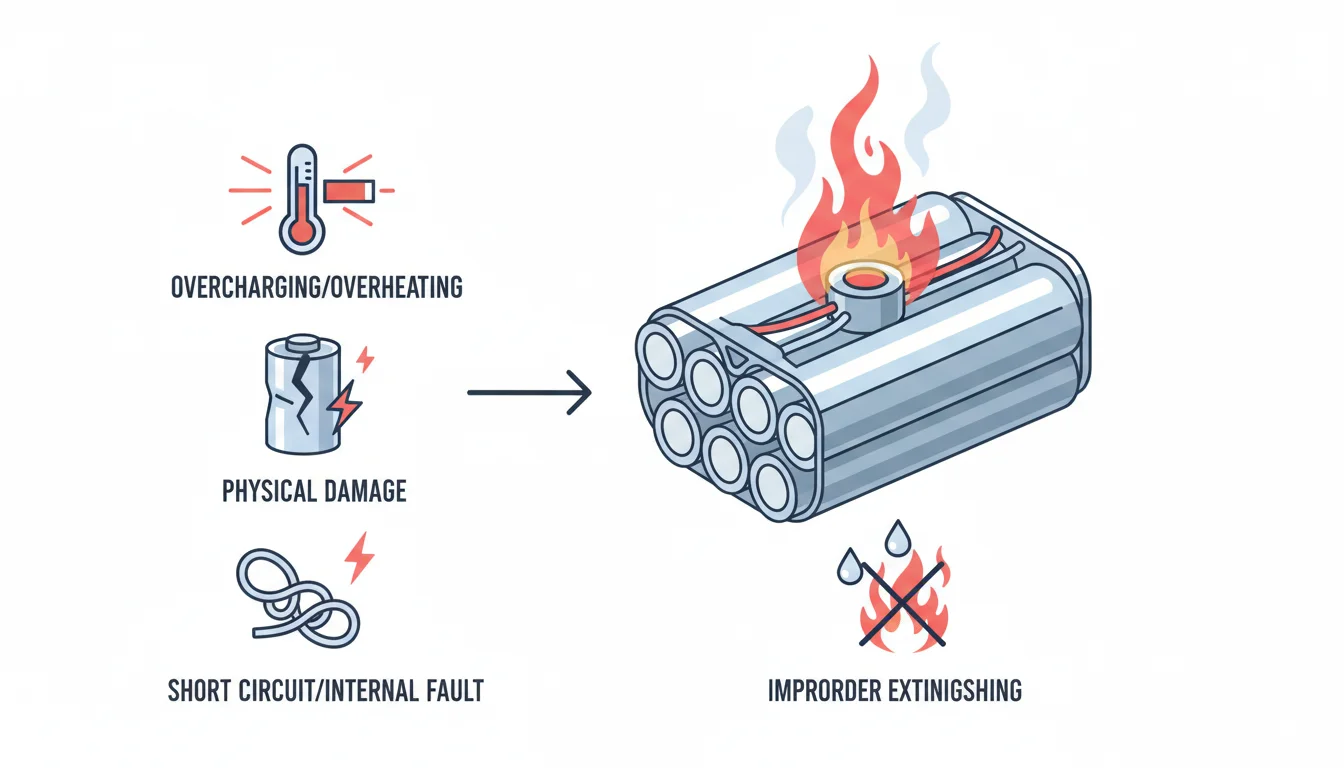
Thermal runaway triggers nearly every ebike battery fire. One cell overheats, ruptures, and ignites neighboring cells in a chain reaction that spreads faster than you can react.
Primary failure points:
| Cause | How It Triggers Fire | Prevention |
|---|---|---|
| BMS failure | Fails to stop overcharging or balance cells | Buy certified batteries with quality BMS |
| Overcharging | Pushes cells past voltage limits, causing expansion | Unplug at full charge, use OEM charger |
| Internal short circuits | Manufacturing defects or impact damage | Inspect regularly, replace damaged batteries |
| Incompatible chargers | Delivers wrong voltage or amperage | Only use manufacturer-provided charger |
| Water damage | Corrodes connections, creates shorts | Keep battery dry, check seals |
| Cheap uncertified batteries | Lack proper safety circuits | Buy UL 2849 certified products only |
The BMS serves as your battery's brain. It monitors cell voltage, temperature, and current flow. When it fails, nothing stops a cell from overcharging to destruction.
Researching fire reports reveals a clear pattern: nearly every fatal incident involved either a cheap replacement battery or a third-party charger. The $50 you save buying off-brand creates $50,000 in property damage risk. London Fire Brigade investigations confirm that non-compliant batteries cause most fires.
Warning Signs Your Ebike Battery May Be at Risk
A failing battery announces itself before catching fire. The warning window might last days or weeks. Miss these signals, and you lose the chance to prevent disaster.
Stop using your battery immediately if you notice:
- Swelling or bulging of the battery casing
- Unusual heat during charging or riding beyond normal warmth
- Chemical odors like burning plastic or sweet metallic smells
- Decreased range indicating internal cell degradation
- Visible damage including dents, cracks, or punctures
- Charging problems such as failure to hold charge or excessive heat while plugged in
Swelling means gases are building inside. The cells have already started failing. This battery needs professional disposal—not another charge cycle.
Trust your nose. That faint chemical smell during charging signals electrolyte leakage. One rider ignored the smell for three days. His garage burned down on day four.
Ebike Battery Fire Statistics: Understanding the Real Risk
Fires remain statistically rare when measured against millions of ebikes on roads worldwide. Roughly 1 fire occurs per 15,000 ebikes. Quality batteries charged correctly present minimal danger.
| Region | Fires | Deaths | Injuries | Time Period |
|---|---|---|---|---|
| UK | 362 | Multiple | Dozens | 2024 |
| London | 165+ | 3+ | Multiple | 2026 (record year) |
| New York City | 800+ | 30 | 400+ | Since 2022 |
| San Francisco | 99 | N/A | Multiple | 2022-2023 |
| Houston | 60+ | N/A | Multiple | 2023 |
UK fires doubled from 181 in 2022 to 362 in 2024. London projects over 500 ebike and e-scooter battery fires in 2026. The trend accelerates as adoption grows. QBE Europe reports that lithium-ion battery fires doubled in two years.
For perspective, cooking fires cause over 170,000 home fires annually in the US. Your stove presents far greater statistical danger. However, ebike fires burn hotter, spread faster, and produce toxic fumes that can kill in minutes. This comparison matters for context, not complacency.
How to Prevent Ebike Battery Fires
Prevention works. The fire rate for properly maintained, certified batteries approaches zero. Every safety step you take dramatically cuts your risk.
Essential practices:
- Buy UL 2849 certified batteries from reputable brands with genuine safety marks
- Use only the manufacturer-provided charger for correct voltage and amperage
- Never charge unattended or overnight when you cannot respond to problems
- Store at room temperature between 50-77°F, away from flammable materials
- Inspect monthly for swelling, damage, or wear
- Let batteries cool after riding before plugging in
- Avoid temperature extremes including hot cars and freezing storage
- Replace batteries showing any warning signs immediately
The charger rule saves lives. Third-party chargers cause fires even with quality batteries. That $30 Amazon charger might deliver 54V to your 48V battery. The math ends in flames.
Charging location matters as much as equipment. Place your battery on concrete or tile, away from exits. If it ignites, you want clear escape routes. Ebike safety expert Richard Gasperotti warns: "Charging overnight inside a house where people are asleep can be extremely dangerous." We Love Cycling
What to Do If an Ebike Battery Catches Fire
Evacuation comes first. Lithium battery fires reach 1,100°F within seconds and produce hydrogen fluoride gas that damages lungs with a single breath. Get everyone out before attempting anything else.
Emergency response steps:
- Evacuate immediately without attempting to fight the fire
- Call 911 and specify lithium-ion battery fire
- Move the ebike outside only if safely possible before flames spread
- Stay upwind to avoid toxic fumes
- Never use water on active lithium fires, as it can cause explosions
- Never touch a burning or smoking battery with bare hands
Class D fire extinguishers or sand work on lithium fires. Water does not. Water hitting burning lithium creates hydrogen gas that explodes. If you lack proper equipment, let it burn and protect surrounding property instead.
Firefighters need to know about lithium batteries. These fires can reignite hours after appearing extinguished. NYC Fire Commissioner Laura Kavanaugh reports that ebike batteries caused 500 fires in two years, killing 24 people. MetroStor UK documents similar patterns in London.
FAQ
How long do ebike batteries last before becoming a fire risk?
Quality lithium-ion batteries maintain safety for 500-1,000 charge cycles or 3-5 years. Replace batteries after 3 years of regular use or when range drops below 70% of original capacity. Degraded cells increase thermal runaway risk.
Are ebike fires covered by homeowners insurance?
Most policies cover ebike fires, but some insurers exclude lithium battery incidents or deny claims involving uncertified equipment. Check your policy for lithium battery exclusions and document your battery's certification and purchase source.
Can I charge my ebike battery indoors safely?
Indoor charging is safe with certified equipment, proper supervision, and placement away from exits and flammables. Never charge in bedrooms or block escape routes. A garage or utility room with smoke detectors offers the safest indoor location.
Do ebike battery fires happen more in summer or winter?
Fires peak in summer when ambient heat combines with charging heat to stress cells. Extreme cold also increases risk by causing internal damage during charging. Moderate temperatures between 50-77°F present the lowest fire risk.
Should I remove my ebike battery when not in use?
Remove and store batteries separately for extended storage periods. Keep charge between 40-60% for storage lasting more than two weeks. This reduces stress on cells and allows you to store the battery in a temperature-controlled environment.
What certifications should I look for when buying an ebike battery?
UL 2849 certification indicates comprehensive safety testing for ebike electrical systems. Look for genuine CE marks for European standards. Avoid batteries lacking any certification or showing only unverified safety claims.
Can I repair a damaged ebike battery myself?
Never attempt DIY repairs on lithium-ion batteries. Puncturing cells or creating shorts during repair causes immediate thermal runaway. Damaged batteries require professional assessment and disposal through certified e-waste facilities.
Share this post
Related Posts
Why Is My Ebike Throttle Not Working? 8 Common Causes and Fixes
Why Is My Ebike Throttle Not Working? 8 Common Causes and Fixes
Can E-Bikes Be Ridden in the Rain? Complete Guide to Wet Weather Riding in 2026
Can E-Bikes Be Ridden in the Rain? Complete Guide to Wet Weather Riding in 2026
Do You Need a Driver's License for an E-Bike? 2026 State-by-State Guide
Do You Need a Driver's License for an E-Bike? 2026 State-by-State Guide