Why Does My E-Bike Battery Keep Cutting Out? Complete Troubleshooting Guide (2026)
E-bike battery cutouts occur when protective systems detect unsafe conditions and shut down power to prevent damage. Over 80% of cutout issues trace back to three causes: battery management system triggers, thermal protection activation, or loose electrical connections. This guide walks you through diagnosing and fixing each problem yourself.
Understanding Your E-Bike's Battery Management System (BMS)
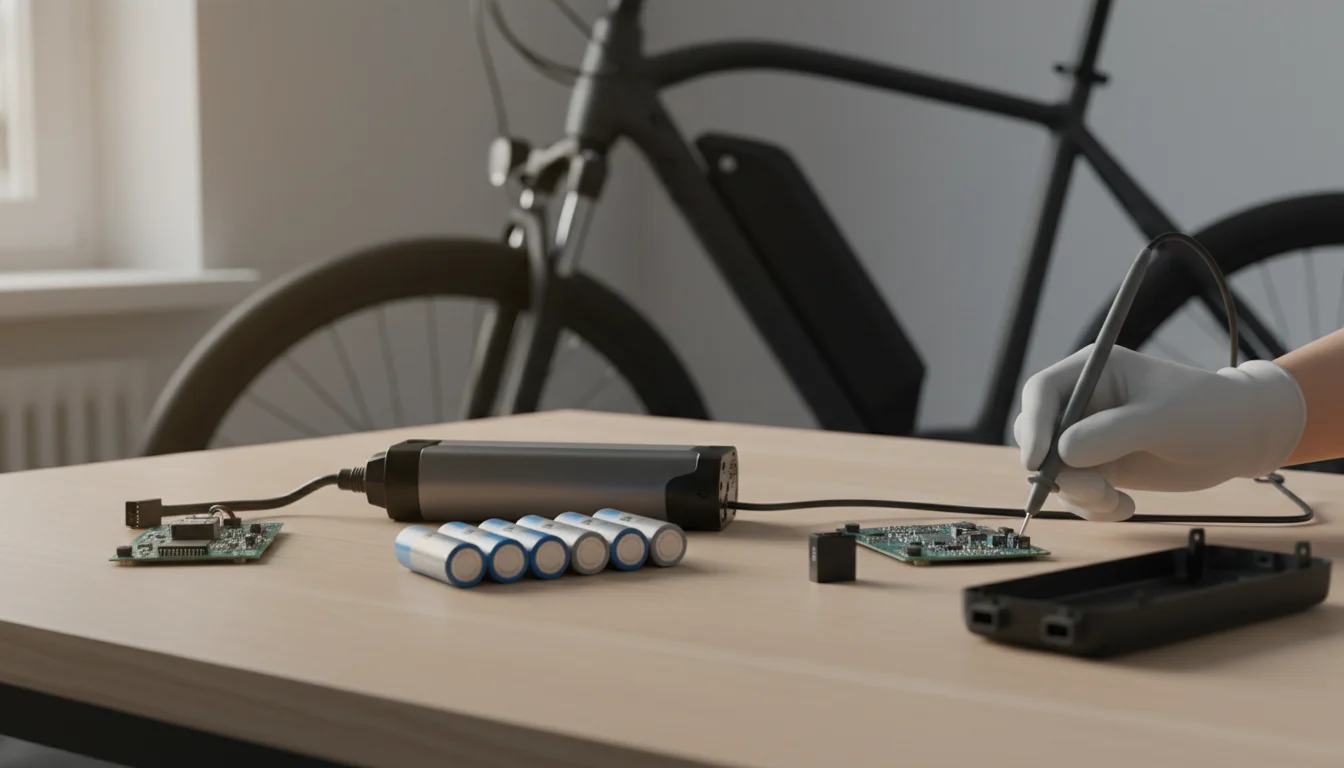
The BMS acts as your battery's safety guardian, monitoring voltage, current, and temperature across every cell in real time.
When any parameter exceeds safe limits, the BMS cuts power instantly. This protects your battery from overcharging, over-discharging, and thermal damage that could cause permanent cell degradation or fire.
Common e-bike battery BMS issues show predictable patterns:
- Sudden mid-ride cutout: BMS detected voltage drop below minimum threshold
- Inconsistent power delivery: One or more cells failing to hold charge evenly
- Won't charge to 100%: BMS blocking full charge due to cell imbalance
- Cuts out only under load: Current draw exceeding BMS protection limits
BMS failures fall into two categories. Software glitches sometimes resolve with a full discharge-recharge cycle. Hardware failures require battery replacement since the BMS is typically sealed inside the pack.
A failing BMS often gives warning signs weeks before complete failure. Watch for gradually decreasing range or power that returns after the battery cools. These patterns suggest the BMS is triggering prematurely due to degraded cells rather than actual unsafe conditions. Letrigo provides detailed diagnostics for identifying BMS-specific failures.
Power Cutting Out Under Load or Acceleration
Why does my e-bike battery keep cutting out during hill climbs or hard acceleration? Your motor demands three to five times more current during these moments, causing battery voltage to temporarily sag.
This voltage drop triggers protective cutoffs in the BMS or controller. The system interprets the sag as a dangerously low battery, even when plenty of charge remains.
| Cause | Symptom | Quick Test | Solution |
|---|---|---|---|
| Voltage sag from cell degradation | Cutout on hills, works on flat ground | Check resting vs. loaded voltage | Battery replacement if >20% sag |
| Loose connections | Random cutouts during vibration | Wiggle connectors while riding | Tighten and clean all terminals |
| Controller current limiting | Power reduces before full cutout | Monitor display during acceleration | Reduce assist level or upgrade controller |
| BMS overcurrent protection | Instant shutoff at specific power levels | Note exact conditions when cutout occurs | Lower power demands or replace battery |
Fair warning: batteries that previously handled 30-mile rides at moderate speeds will struggle when pushed hard after degradation sets in. Bike Forums documents cases where riders saw dramatic range reduction under load months before flat-ground performance declined.
The fastest fix? Drop your assist level one notch before climbs. This reduces current draw below the threshold that triggers protection.
Motor Overheating and Thermal Protection
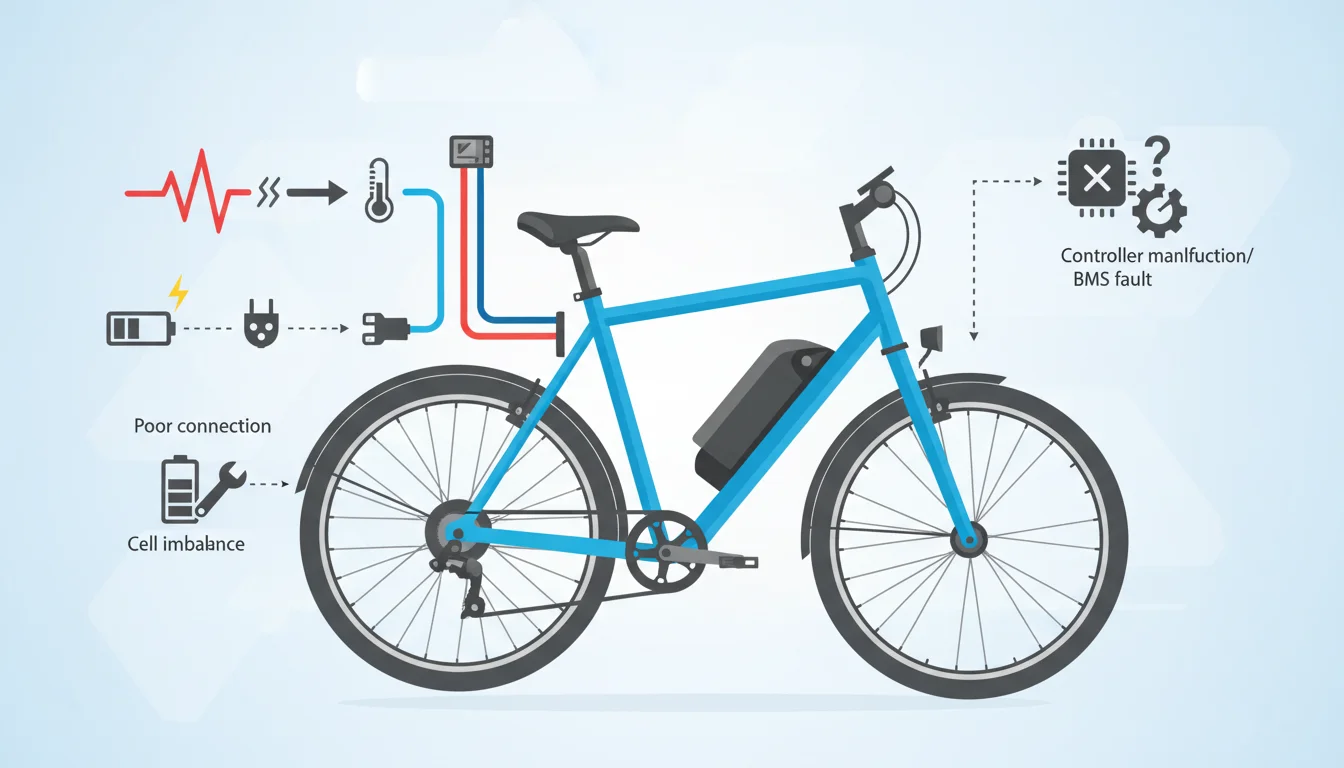
Thermal cutoff sensors monitor your motor and controller temperatures, reducing power gradually before shutting down completely at critical thresholds.
This gradual power reduction is your warning sign. If you notice assist fading over several minutes before cutout, thermal protection is the culprit.
Hub motors and mid-drives handle heat differently:
- Hub motors: Sealed inside the wheel with minimal airflow, heat builds quickly on climbs and dissipates slowly. Expect cutoffs after 10–15 minutes of sustained hill climbing in warm weather.
- Mid-drive motors: Better ventilation and heat transfer to the frame allow them to handle climbing better, though they transfer heat to drivetrain components.
Prevention strategies that actually work:
- Stop for 5-minute cooling breaks on long climbs
- Reduce assist level before you feel power fading
- Avoid sustained full-throttle riding exceeding 10 minutes
- Check that motor housing vents are clear of debris
I learned this the hard way on a summer ride. The motor felt fine, power felt strong, then nothing. Twenty minutes of shade and the bike ran perfectly again. Now I watch for that subtle power fade and back off before the system forces me to stop. Magicycle confirms this pattern across multiple motor types.
Battery Terminal Corrosion and Connection Issues
Corrosion creates resistance at connection points. This resistance generates heat under load, triggering thermal protection or causing complete power loss.
Inspect your terminals monthly. Corrosion appears as white, green, or blue crusty deposits on metal contacts. Even light oxidation increases resistance enough to cause problems.
Cleaning process:
- Remove the battery from the bike completely
- Spray contacts with electrical contact cleaner or 90%+ isopropyl alcohol
- Scrub terminals gently with a soft brush or cotton swab
- Allow complete drying before reconnecting
- Apply a thin layer of dielectric grease to prevent future corrosion
Beyond terminals, check these common failure points:
- Main battery-to-controller connector
- Handlebar control wiring near stem clamp
- Motor phase wires at controller junction
- Display cable connections
Metal contactors inside the battery mount can stretch over time, losing proper contact with battery pins. A small screwdriver carefully bending contactors outward restores connection without replacement. YouTube tutorials show this fix takes under five minutes.
When you find frayed insulation or damaged wires, stop riding immediately. Short circuits from exposed conductors trigger immediate shutdowns and risk fire.
Controller Malfunctions and Error Codes
The controller regulates power flow between battery and motor, making thousands of calculations per second. When it fails, symptoms range from erratic power delivery to complete shutoff.
Your display shows error codes when the controller detects problems. These codes vary by manufacturer but follow common patterns:
| Error Type | Common Codes | Meaning | Action |
|---|---|---|---|
| Motor fault | E001, E003 | Motor connection or hall sensor issue | Check motor cable connections |
| Battery fault | E002, E006 | Voltage outside acceptable range | Verify battery charge and connections |
| Controller fault | E004, E008 | Internal controller failure | Reset controller, check for firmware update |
| Sensor fault | E005, E007 | Speed or cadence sensor malfunction | Clean and realign sensors |
| Thermal fault | E009, E010 | Overtemperature detected | Allow cooling, check ventilation |
Controller reset procedures differ by brand. Most involve disconnecting the battery for 30 seconds, then reconnecting while holding the power button. Check your manual for specific steps.
Firmware updates fix known bugs that cause cutouts. Connect to manufacturer apps via Bluetooth or visit a dealer for USB updates. A 10-minute update solved intermittent cutouts on my bike that I'd been troubleshooting for weeks. [BeeCool Bikes] maintains updated firmware guidance for major brands.
Step-by-Step Diagnostic Troubleshooting Guide
Start with the simplest checks. Most cutout issues resolve without opening anything or buying parts.
Step 1: Verify battery basics Charge fully and confirm the display reads 100%. If charging stops early or the display shows an incorrect percentage, BMS or charger issues exist. Try a different charger if one is available.
Step 2: Inspect all visible connections Remove and reseat the battery. Check the main power connector for corrosion or damage. Wiggle each connector while the bike is on, watching for power flickers.
Step 3: Test under controlled conditions Ride the same route at different assist levels. Note the exact conditions when cutouts occur: assist level, incline, temperature, and time into the ride. Patterns reveal causes.
Step 4: Document error codes Photograph any error codes immediately. Note what you were doing when the code appeared. Multiple codes often point to a single root cause.
Step 5: Isolate current-related issues If cutouts only happen at high assist, reduce the power level by two settings. Successful riding at lower power confirms the battery or controller cannot handle high current demands.
Escalate to professional diagnosis when cutouts persist after connection cleaning, error codes indicate internal faults, or you smell burning from any component. Fiido offers additional brand-specific troubleshooting paths.
When to Repair vs. Replace Your E-Bike Battery
Battery replacement becomes necessary when cells degrade beyond practical use. This typically occurs after 500–1,000 charge cycles or 3–5 years of regular riding.
| Symptom | Likely Cause | Repair Option | Replace If... |
|---|---|---|---|
| Range reduced 30%+ | Cell degradation | None viable | Degradation confirmed by voltage test |
| Frequent low-power cutouts | Failing cells or BMS | BMS reset attempt | Cutouts persist after reset |
| Won't hold charge overnight | Internal short or dead cells | Cell replacement (specialist only) | Multiple cells affected |
| Charging stops at 80% | Cell imbalance | Balance charging cycles | Imbalance persists after 5 cycles |
| Physical swelling | Dangerous cell failure | None—dispose immediately | Any swelling present |
Battery reconditioning works when cell imbalance causes problems. A full discharge followed by a slow charge can rebalance cells. This approach fails when cells have physically degraded.
OEM replacement batteries cost more but guarantee compatibility. Third-party options save 30–50% but require careful specification matching. Verify voltage, amp-hour rating, and physical dimensions before purchasing.
Dispose of old lithium batteries at designated recycling centers. Many bike shops accept old batteries. Never place lithium batteries in regular trash due to fire risk.
FAQ
How do I know if my e-bike battery is dying?
Watch for range dropping below 70% of original capacity, frequent cutouts under moderate load, and visible swelling of the battery case. Healthy batteries maintain consistent voltage under load, while dying batteries show voltage drops exceeding 20% during acceleration.
Can I ride my e-bike with a faulty BMS?
Riding with a malfunctioning BMS risks battery damage, fire, or being stranded when protection triggers unexpectedly. The BMS prevents dangerous overcharge and discharge conditions. Replace faulty batteries rather than bypassing safety systems.
Why does my e-bike cut out when the battery shows 50% charge?
Voltage sag under load drops the actual voltage below cutoff thresholds even when capacity remains. This indicates cell degradation or a battery undersized for your power demands. Reducing the assist level or replacing the battery resolves this issue.
How long should I wait after a thermal cutout before riding again?
Allow 15–20 minutes of rest in the shade for full motor cooling. Touch the motor housing to gauge readiness—if it's too hot to hold comfortably, continue waiting. Riding before adequate cooling triggers immediate repeat cutoffs.
Do e-bike batteries fail suddenly or gradually?
Most batteries show gradual degradation through reduced range and increased cutout frequency over months. Sudden complete failure usually indicates a BMS fault or physical damage rather than normal cell aging. Regular monitoring catches gradual decline before total failure occurs.
Can cold weather cause my e-bike to cut out?
Lithium batteries lose 20–40% capacity in freezing temperatures. The BMS may cut power when cold cells cannot deliver sufficient current. Store batteries indoors overnight and allow them to warm up before riding in winter conditions.
Should I fully discharge my e-bike battery before charging?
No. Lithium batteries prefer partial discharge cycles. Charging from 20–80% extends lifespan compared to full discharge cycles. Deep discharges stress cells and accelerate degradation. Only perform full discharge cycles when attempting to rebalance cells.
Share this post
Related Posts
Why Is My Ebike Throttle Not Working? 8 Common Causes and Fixes
Why Is My Ebike Throttle Not Working? 8 Common Causes and Fixes
Can E-Bikes Be Ridden in the Rain? Complete Guide to Wet Weather Riding in 2026
Can E-Bikes Be Ridden in the Rain? Complete Guide to Wet Weather Riding in 2026
Do You Need a Driver's License for an E-Bike? 2026 State-by-State Guide
Do You Need a Driver's License for an E-Bike? 2026 State-by-State Guide