Do E-Bikes Work in Cold Weather? Winter Riding Guide for 2026
E-bikes function in cold weather, but lithium-ion batteries lose 30-50% of their range when temperatures drop below freezing. This guide covers battery performance thresholds, safe charging practices, and proven strategies for winter riding.
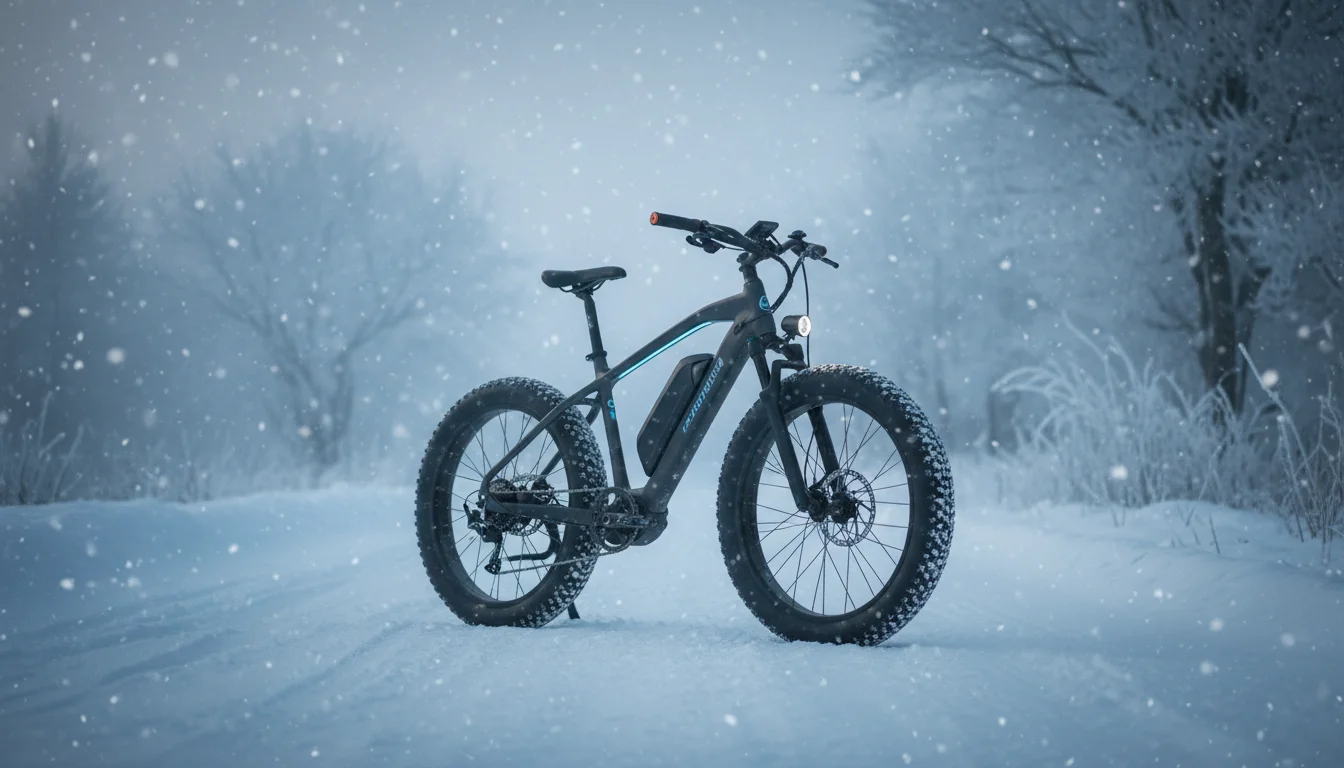
How Cold Affects E-Bike Battery Performance
Lithium-ion batteries power most e-bikes through electrochemical reactions that slow dramatically in cold temperatures. The electrolyte solution thickens, ions move sluggishly between poles, and internal resistance climbs. The result: your battery delivers less power and drains faster.
Do e-bikes work in the cold? Yes, but expect these performance changes:
| Temperature Range | Range Reduction | Power Output | Charging Safety |
|---|---|---|---|
| Above 50°F (10°C) | Minimal | Normal | Safe |
| 32-50°F (0-10°C) | 15-25% | Slightly reduced | Safe |
| 20-32°F (-6 to 0°C) | 30-40% | Noticeably reduced | Safe above 32°F |
| Below 20°F (-6°C) | 40-50%+ | Significantly reduced | Avoid charging |
The good news: this performance loss is temporary. Your battery recovers full capacity once it warms up. Cold weather doesn't permanently damage batteries if you handle charging correctly. I learned this firsthand after panicking about a battery that showed 60% capacity on a 25°F morning, only to see it bounce back to normal indoors.
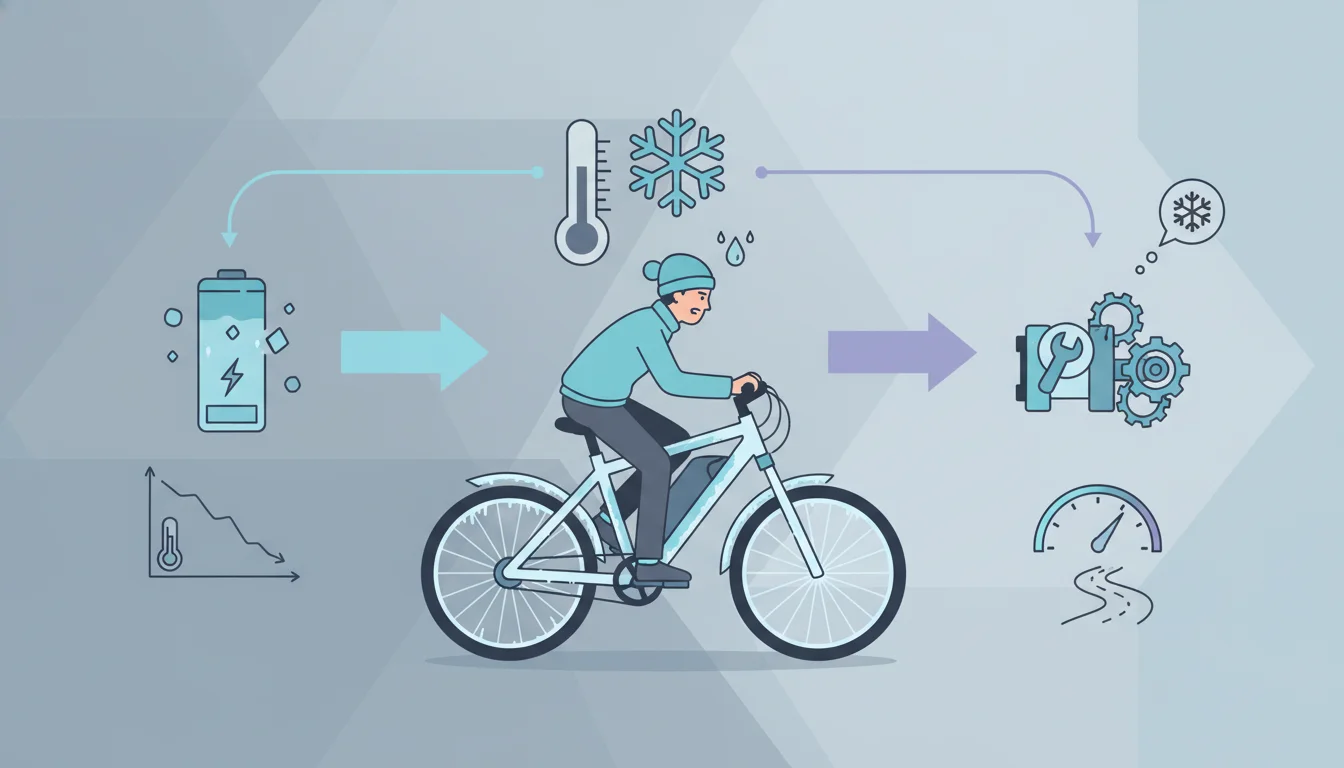
Temperature Thresholds: When Is It Too Cold to Ride?
Most e-bike batteries function safely down to 20°F (-6°C), with performance declining noticeably below freezing. The critical threshold isn't riding temperature—it's charging temperature.
| Condition | Temperature | What Happens |
|---|---|---|
| Comfortable riding | Above 32°F (0°C) | Minor range reduction |
| Cold riding | 20-32°F (-6 to 0°C) | 25-40% range loss typical |
| Extreme cold riding | Below 20°F (-6°C) | Significant performance drop |
| Safe charging range | 32-113°F (0-45°C) | Normal charging |
| Dangerous charging | Below 32°F (0°C) | Risk of permanent damage |
Riders in Minnesota and Canada regularly report commuting at -10°F with proper preparation. The battery works—your hands and face become the limiting factors before the bike gives up. Fair warning: charging a frozen battery causes lithium plating inside the cells. This damage is permanent and creates safety hazards. eMovement confirms that sub-zero charging shortens battery lifespan dramatically.
Charging Your E-Bike Safely in Winter
Bring your battery indoors and let it warm to room temperature before plugging in. This single habit prevents the most common form of cold-weather battery damage. Rushing to charge a cold battery risks permanent cell degradation.
- Wait 30-60 minutes after bringing a cold battery inside before charging
- Check that the battery feels room temperature to the touch
- Never charge immediately after a cold ride
- Store the charger indoors as well
- Watch for error lights or charging that won't start
Your battery communicates when it's too cold. The charging indicator may flash erratically, refuse to light up, or show unusually slow progress. Trust these signals. Shimano Lifestyle notes that warming the battery to room temperature restores normal charging behavior.
Most manufacturers specify charging between 41°F and 77°F (5°C to 25°C). Check your manual—charging outside this range often voids warranties.
Winter Storage Tips for E-Bike Batteries
Store batteries at 40-70% charge in a temperature-controlled space between 50-77°F. A fully charged battery degrades faster during storage, while a fully depleted battery risks dropping below safe voltage levels.
- Remove the battery from your bike if storing in an unheated garage or shed
- Check charge level monthly during extended storage
- Top up to 50% if the level drops below 30%
- Keep away from heat sources and direct sunlight
- Store on a non-flammable surface
I made the mistake of leaving a battery in my garage through January. The charge dropped to 8% by February because cold temperatures accelerate self-discharge. The battery survived, but that stress shortened its lifespan. SixThreeZero recommends indoor storage as the single most important winter battery practice.
Practical Tips for Cold Weather E-Bike Riding
Start every winter ride with a warm battery stored indoors overnight. This simple step recovers most of the range you'd otherwise lose. Battery temperature matters more than air temperature.
- Use a neoprene battery cover or insulated bag during rides
- Plan routes 30-40% shorter than your summer range
- Warm up the motor with gentle pedaling for the first mile
- Use lower assist levels to conserve power
- Keep the battery above 20% charge in cold conditions
- Bring the battery inside at your destination
Fat tires or studded tires transform winter traction. Snow and ice force the motor to work harder, draining the battery faster. Better tires reduce that strain. RydyBikes reports that appropriate winter tires extend range by reducing the extra load on your motor.
Riders who thrive in winter treat their battery like a passenger that needs warmth. They carry it into coffee shops, offices, and stores. This habit sounds excessive until you experience the range difference firsthand.
Real-World Winter E-Bike Performance: What Riders Report
Commuters in cold climates consistently report 25-40% range loss at temperatures between 20-30°F. This matches manufacturer estimates and battery chemistry predictions. Once you know what to expect, the experience becomes predictable.
| Climate | Typical Temps | Reported Range Loss | Key Strategy |
|---|---|---|---|
| Pacific Northwest | 35-45°F | 15-20% | Battery cover sufficient |
| Midwest | 15-30°F | 30-40% | Indoor storage essential |
| Upper Midwest/Canada | -10 to 20°F | 40-50% | Preheating and covers |
| Mountain regions | Variable | 25-45% | Altitude compounds cold effects |
Forum discussions on Electric Bike Review show riders commuting year-round in Minneapolis, Montreal, and Denver. Their consensus: the battery limitation is real but manageable. Full range returns when temperatures rise or the battery warms up. No permanent damage occurs with proper charging habits.
FAQ
Does cold weather permanently damage e-bike batteries?
Cold riding doesn't cause permanent damage. Cold charging does. Keep your battery warm before plugging in, and you'll preserve its full lifespan and capacity.
How long should I warm my battery before charging?
Wait 30-60 minutes after bringing a cold battery indoors. The battery should feel room temperature to the touch before you connect the charger.
Do battery covers actually help in winter?
Neoprene covers add 10-15% range in cold conditions by retaining heat generated during use. They work best on rides longer than 20 minutes, where the battery generates enough warmth to trap.
What's the coldest temperature I can ride an e-bike?
Riders successfully commute at -10°F (-23°C) with proper preparation. Your comfort and traction become limiting factors before the battery fails completely.
Should I fully charge my battery before winter storage?
No. Store at 40-70% charge. A full charge accelerates degradation during storage, while empty batteries risk dropping below safe voltage and becoming unusable.
Why does my battery show wrong capacity in cold weather?
Battery management systems measure voltage, which drops in cold temperatures. The capacity reading improves as the battery warms. This is normal behavior, not a defect.
Can I use my e-bike in snow?
Yes. Fat tires or studded tires provide traction. Snow increases motor load and battery drain, so plan for 40-50% shorter range and ride at reduced speeds for safety.
How often should I check stored batteries in winter?
Check monthly. Top up to 50% if the charge drops below 30%. Batteries self-discharge faster in cold storage, even when removed from the bike.
Share this post
Related Posts
Why Is My Ebike Throttle Not Working? 8 Common Causes and Fixes
Why Is My Ebike Throttle Not Working? 8 Common Causes and Fixes
Can E-Bikes Be Ridden in the Rain? Complete Guide to Wet Weather Riding in 2026
Can E-Bikes Be Ridden in the Rain? Complete Guide to Wet Weather Riding in 2026
Do You Need a Driver's License for an E-Bike? 2026 State-by-State Guide
Do You Need a Driver's License for an E-Bike? 2026 State-by-State Guide